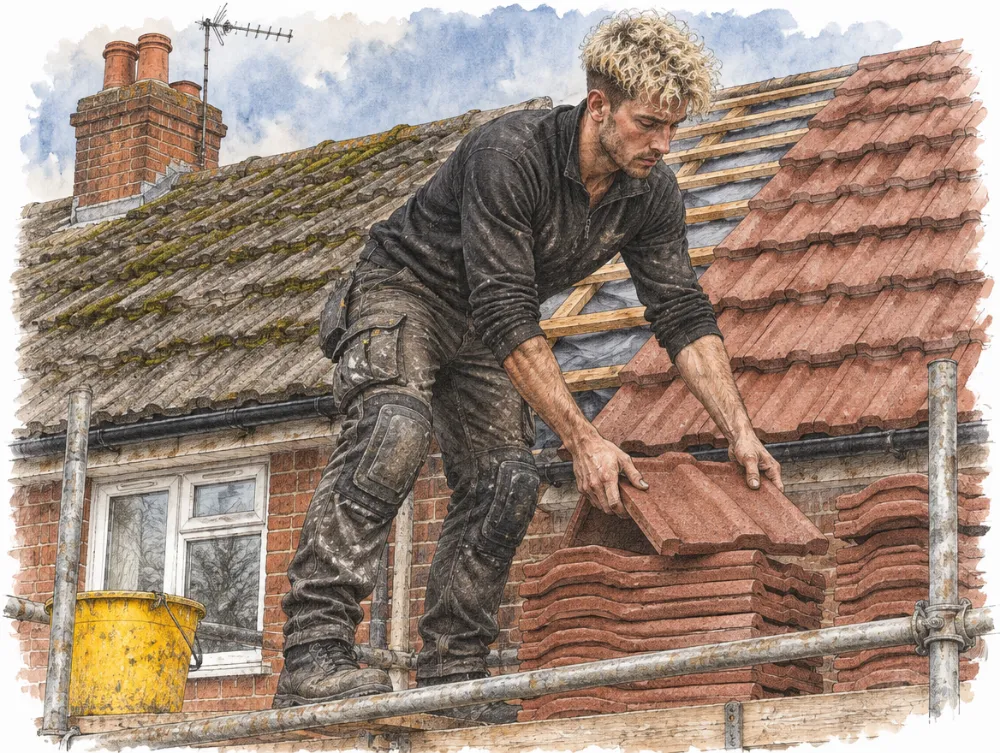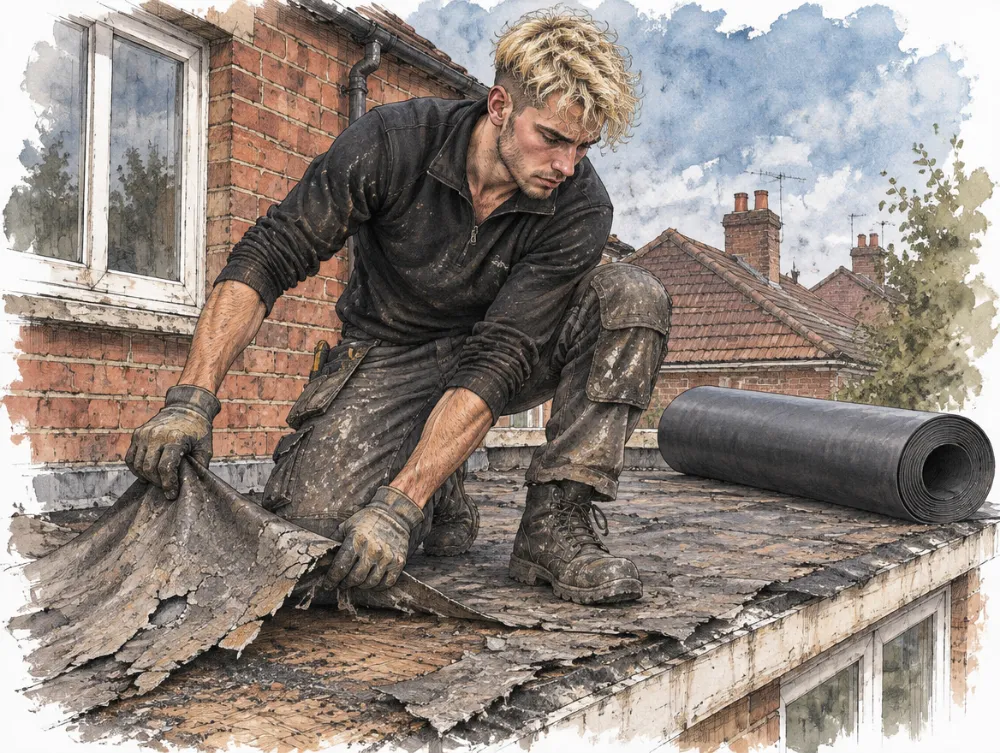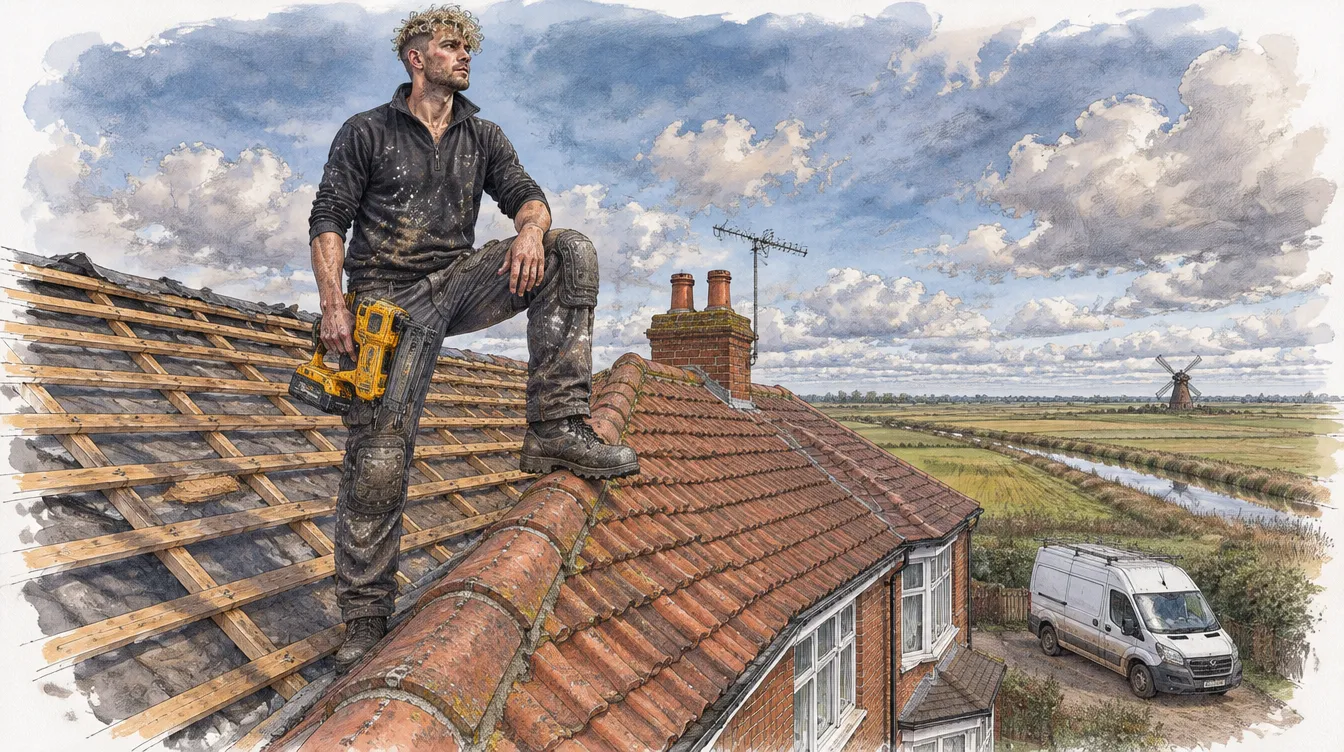
Roofz are roofers in Spalding, covering the town and the villages across South Holland from our base in Wisbech.
We do roof repairs, re-roofs, slate work, EPDM flat roofs, chimneys, leadwork, gutters and fascias.
Every job starts with a free survey and a fixed price in writing, and finishes with a written guarantee.
Leaking, slipping or blowing about? Book a free survey and we'll come and have a look.
What we do in Spalding
- Roof repairs: slipped slates, broken tiles, loose ridges and leaks. Our roof repair cost guide has 2026 price ranges.
- Slate roofs: repairs, re-nailing and full re-slating. See tile vs slate.
- Re-roofs: stripped, new membrane and battens, re-covered. See our new roof cost guide.
- Flat roofs: EPDM rubber is our speciality, see flat roof replacement cost.
- Chimneys and lead: repointing, flaunching, lead flashings.
- Gutters and roofline: cleaning, repairs, uPVC fascias and soffits.
The full list is on our services section.
Roofs we see in Spalding
Spalding grew along the River Welland, and the river still shapes the town.
So do its roofs.
Georgian riverside and the conservation area
Spalding's conservation area was first designated in 1970, and South Holland District Council adopted a new appraisal on 30 June 2026, with a revised boundary from 1 July 2026.
About 140 buildings in the town are listed, mostly inside it.
South of High Bridge, Georgian town houses line the river in long terraces of two and three storeys.
Welland Terrace, built around 1813, is a row of 15 houses facing the water.
Ayscoughfee Hall is a 15th-century house, now a museum.
The Crescent dates from 1843, and Pinchbeck Road has a run of Victorian villas.
Slate country
The appraisal says Welsh slate is the main historic roof covering in the conservation area, with some red clay pantiles.
Thatch used to be common, but the White Horse pub is about the only thatched roof left.
Old slate roofs usually fail at the fixings first.
The nails rust, a slate slides out, then its neighbour, and before long there's a gap in the roof and a damp patch on the ceiling.
Clipping odd ones back in with tingles is fine for a while.
When it's happening every winter, it's time to strip the slope, save the good slates and re-fix the lot.
On a listed building, swapping slate for concrete tiles is not an option, and we won't suggest it.
Red brick, stone trim and chimneys
Red and brown brick is the main walling material in the old town, with limestone dressings round windows on the better Georgian and Victorian houses.
Old brick chimneys were laid in soft lime mortar, and it's meant to be softer than the brick.
Repoint one in hard cement and the brick takes the punishment instead, so it spalls and crumbles.
We repoint old stacks in a mortar that suits them, see our chimney repointing guide.
Newer Spalding
Spalding had 28,722 people at the 2011 census, and Pinchbeck now runs into the town's built-up area.
Growth like that brings plenty of modern estate houses, usually with concrete tiles, dry ridges and uPVC roofline.
They're simpler roofs, but the wind still finds a loose verge cap.
Plane trees and gutters
Pinchbeck Road is lined with tall London plane trees.
Very handsome.
Also very good at filling gutters and valleys every autumn.
Blocked valleys on old slate roofs push water under the slates at the worst possible spot, so get them cleared before winter.
Our gutter cleaning guide covers how often.
Flat, open and windy
Spalding sits on silty soil, mostly drained marsh and estuary land, and it's as flat as anywhere in the Fens.
There's a wind farm at Deeping St Nicholas, and you can see it from the town.
Nobody builds a wind farm somewhere calm.
Wind across open land lifts ridge tiles, rattles verges loose and drives rain sideways into flashings, so that's where we look first.
The river and flooding
The town used to flood regularly until the Coronation Channel opened in 1953 to take floodwater round it.
That's what made it possible to build along the riverbanks.
North of High Bridge the riverside is more commercial, with tall warehouses, old steam mills and merchants' houses.
Tall old buildings mean tall chimney stacks and long gutter runs, and both want checking more often than they get it.
Get Leo round for a look
Free survey. One fixed price in writing. No hard sell.
Areas we cover round Spalding
- In town: the town centre, the riverside, Pinchbeck Road, London Road, Spalding Common and Little London.
- Close by: Pinchbeck, Surfleet, Cowbit, Moulton, Weston, Deeping St Nicholas and Crowland.
- Further out: Holbeach, Fleet, Long Sutton and Sutton Bridge, plus the Deepings.
- Postcodes: PE11 and PE12.
We also cover Wisbech, Peterborough and King's Lynn.
How it works
- Free survey. We get up there, take photos and show you what's going on.
- Fixed price in writing. One number, what's included and what isn't. Listed and conservation roofs are priced in the right materials from day one.
- The job. Done properly, site kept tidy, waste removed. If something hidden turns up, you see it first.
- Written guarantee. On paper at the end.
Not sure it needs a whole new roof? Have a look at our signs you need a new roof checklist.
Why use a local roofer
Because Spalding weather comes in flat and fast, and we work in the same weather every day.
We know a Georgian slate roof on the river isn't the same job as a 1990s estate house, and we don't price them as if they were.
We're Fens-based, so we're not driving up from somewhere that's never seen a Fen blow.
You deal with the roofer, not a sales team.
If someone knocks on the door offering a cut-price roof for cash today, have a read of our cowboy builders guide first.
Areas we cover
- Town centre
- Riverside
- Pinchbeck Road
- London Road
- Spalding Common
- Little London
- Pinchbeck
- Surfleet
- Cowbit
- Moulton
- Weston
- Deeping St Nicholas
- Crowland
- Holbeach
- Fleet
- Long Sutton
- Sutton Bridge
- The Deepings
- PE11
- PE12
Questions people ask
Do you cover Spalding and Holbeach?
Yes. Roofz is based in Wisbech and covers Spalding, Pinchbeck, Holbeach, Long Sutton and the villages round them, plus Peterborough and the rest of the Fens.
My Spalding house has an old slate roof and slates keep slipping. Why?
Usually the nails have rusted through rather than the slates wearing out. A few can be refixed, but if it keeps happening it's better value to strip the slope, save the good slates and re-fix them.
Can I replace slate with concrete tiles in the Spalding conservation area?
On a listed building, no, not without listed building consent. Welsh slate is the main historic roof covering in the conservation area, so we match like for like.
The conservation area changed in 2026. Does that affect me?
South Holland District Council adopted a new appraisal on 30 June 2026 with a revised boundary from 1 July 2026, so check with the council whether your street is now inside it before planning visible changes.
Why are my gutters always blocked in autumn?
If you're near big trees, such as the London planes along Pinchbeck Road, gutters and valleys fill quickly. Clearing them before winter stops water backing up under the roof.