Chimney repointing cost in 2026 is usually £300 to £1,200 for a typical stack.
Most jobs land around £750 to £825, depending on whose price guide you read.
A small, low chimney you can reach without scaffolding can come in at £200 to £350.
A tall stack on a two-storey semi that needs a scaffold, new bricks and fresh flaunching can climb to £1,000 to £1,800.
Access is what drives the price.
Scaffold alone often adds £300 to £800 before anyone's picked up a trowel.
How much does chimney repointing cost in 2026?
Here are the typical market prices from the main UK cost guides, rounded and grouped by the size of the job.
They're national averages, so use them as a sense check, not a quote.
| Job | Typical cost | Typical time |
|---|---|---|
| Minor repointing, small accessible chimney | £200 - £350 | 2 - 4 hours |
| Small low-level chimney, full repoint | Around £300 | Under a day |
| Full stack repoint, typical house | £450 - £1,200 | 1 - 2 days |
| Mid-terrace or semi stack with scaffold | Around £1,000 | 1 - 3 days |
| Complex job (new bricks, flashing, flaunching) | £1,000 - £1,800+ | 2 - 3 days |
| Partial chimney rebuild | £600 - £1,000 | 1 - 2 days |
| Full rebuild of stack above roofline | £1,000 - £3,500 | Several days |
MyJobQuote's October 2026 guide puts the average at £825, while Checkatrade's April 2026 chimney repair guide gives an average of £750 and a range of £300 to £1,000.
Most guides don't say clearly whether VAT is included, so always ask for a written price that states it.
Chimney repointing cost by house type
The shape and position of the chimney matter almost as much as its size.
A side chimney on a gable wall can often be reached from one side, while a central stack sits in the middle of the roof and needs more scaffold to get to.
| Property | Typical repointing cost |
|---|---|
| Bungalow | £200 - £700 |
| Semi-detached, side chimney | £600 - £900 |
| Semi-detached, central chimney | £900 - £1,500 |
| Detached house | £700 - £900 |
These figures come from MyBuilder's chimney repair price guide.
Bungalows come in cheapest, because the stack's lower and you can often work off a tower or roof ladder.
Price per square metre
Some roofers price repointing by area rather than by the job.
Checkatrade's repointing figures put raking out old mortar at around £35 per m² and repointing brickwork at around £55 per m², with stonework at around £80 per m².
Those figures date from 2024, so expect a bit more now.
Roofz guide
Chimney repointing cost 2026
What a typical stack costs, where the money goes and when to act before the frost gets in.
The headline numbers
£300-£1,200
Typical full repoint
£750-£825
Average job
£500-£820
Chimney scaffold per week
20-30 yrs
Between repoints
Typical cost by house type (top of range)
Common extras while the scaffold is up (top of range)
Signs your chimney needs repointing
- Mortar cracking, crumbling or washing out
- Joints sunk back as deep as they are wide
- Grit or mortar in the gutters
- Spalling, flaking brick faces
- White staining on the brickwork
- Cracked flaunching round the pots
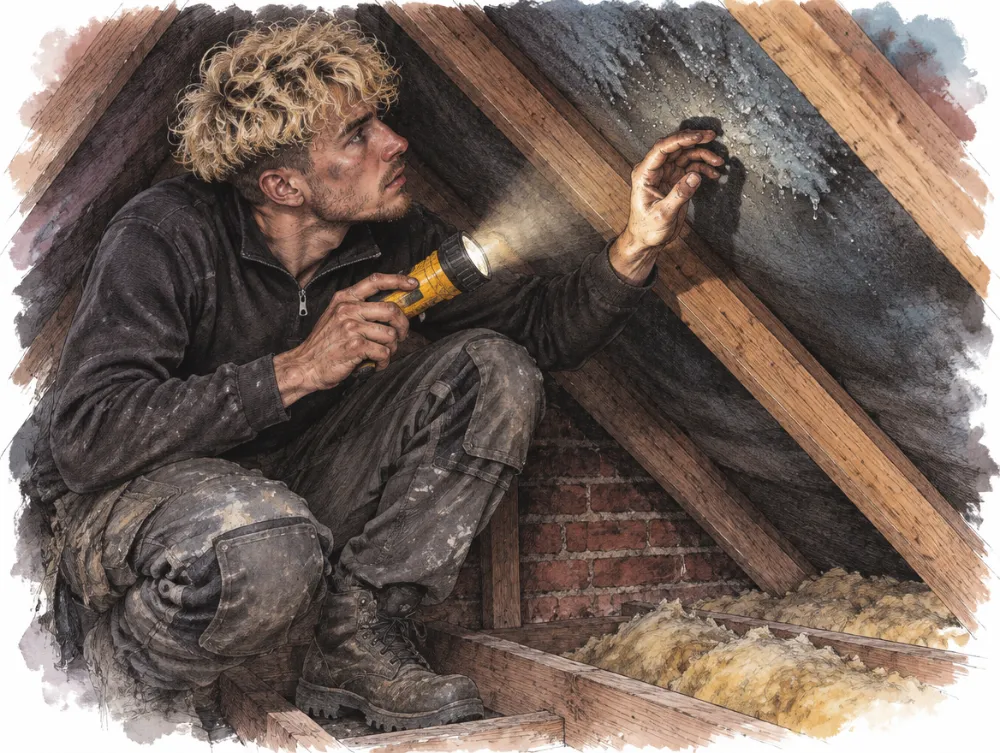
- Damp on the chimney breast
- A leaning stack - get it checked urgently
How a chimney is repointed
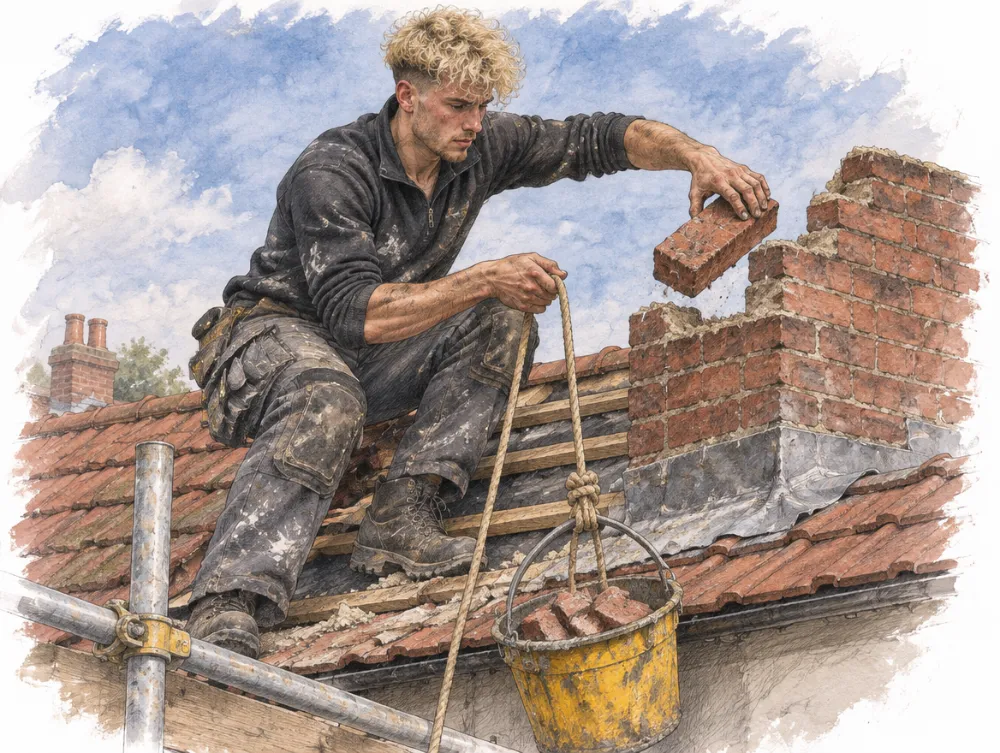
- Access Scaffold, or a tower on a low stack.
- Inspect Bricks, pots, flaunching and flashing.
- Rake out Loose mortar cut out by hand.
- Clean and damp Joints brushed out and wetted.
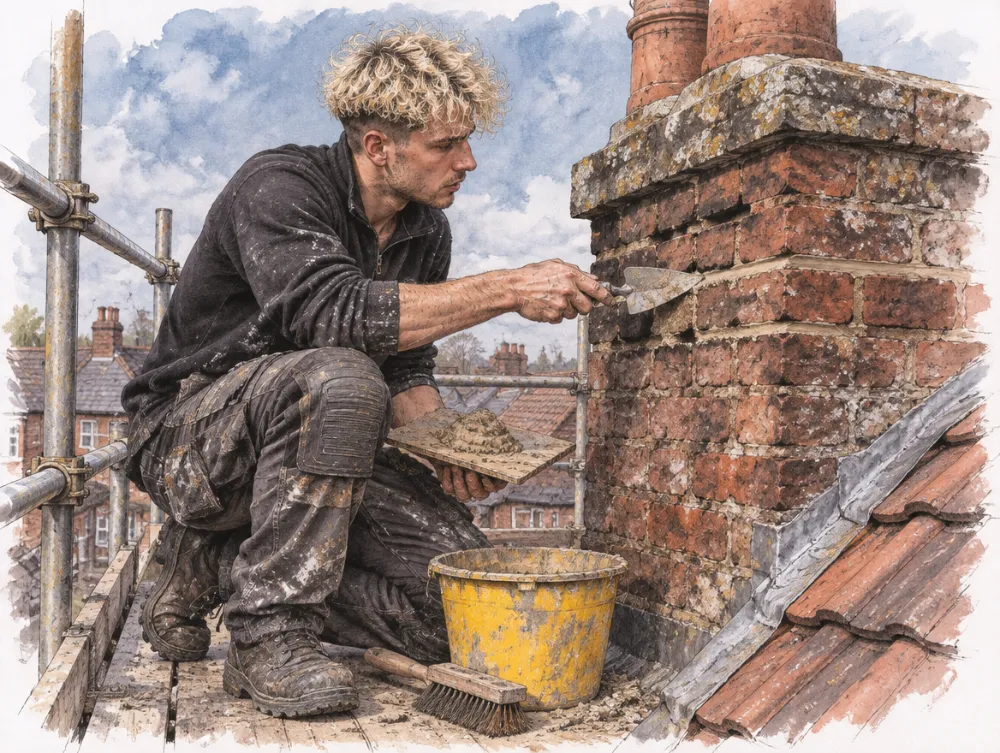
- Repoint New mortar pressed in, finished to match.
- Cure Protected from rain and frost while it sets.
Lime or cement mortar?
Lime mortar
- Older, soft bricks
- Breathable
- Copes with movement
- Costs more, slower
Cement mortar
- Modern, hard bricks
- Can trap moisture
- Rigid
- Cheaper, quicker
What is included in the price?
A chimney repointing quote is really three costs bundled together: getting up there, the labour, and the materials.
Scaffolding
This is usually the biggest line on the bill.
MyJobQuote says scaffolding usually adds £300 to £600 to a repointing job.
Checkatrade's 2025 scaffolding guide puts high-level chimney scaffolding at an average of £660 a week, with a range of £500 to £820.
Roofers answering a 2026 MyJobQuote question gave chimney scaffold prices anywhere from £350 to £2,000, with one Peterborough firm quoting £500 to £2,000 depending on the property size, height and chimney.
If the scaffold has to go over a pavement or road, the scaffolder will also need a council permit, which Checkatrade puts at roughly £140 a month.
Labour
Roofers, bricklayers and chimney specialists typically charge £150 to £250 a day each, according to MyJobQuote.
Roofers usually work in pairs on a chimney, so a day on the stack can mean two day rates.
A small chimney can be done in less than a day, while a larger one can take two or three days.
Materials
Materials are a small part of the total.
MyJobQuote lists mortar mix at £10 to £25 a bag, standard replacement bricks at £1 to £3 each, and reclaimed or matching bricks at £3 to £6 each.
Lime mortar costs more than a standard sand and cement mix, but on an older house it is often the right choice, which we'll come to below.
Common extras
Get up close to an old chimney and something else usually turns up.
| Extra job | Typical cost |
|---|---|
| Replacing damaged bricks | £20 - £40 per brick |
| Flaunching repair (the mortar collar round the pots) | £150 - £300 |
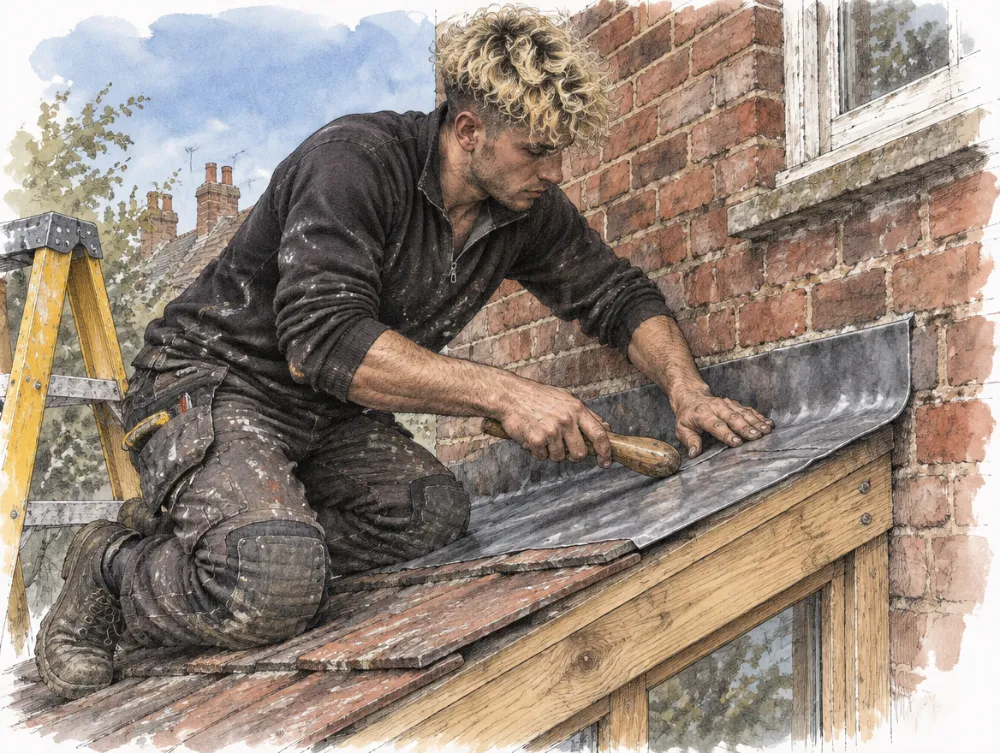
| Lead flashing repair | £150 - £350 |
| Flashing repair, all four sides with scaffold | Up to around £1,000 |
| Chimney cap or cowl | £180 - £520 |
The brick, flaunching and smaller flashing figures are from MyJobQuote, and the larger flashing and cap figures are from Checkatrade's 2026 guide.
MyBuilder suggests adding 10 to 20% to your budget for anything unexpected, which is sensible advice for any job on an old chimney.
If the flashing is the real culprit, our guide to lead flashing repair explains what's involved.
What makes chimney repointing more expensive?
- Height and access - a tall stack on a three-storey house needs far more scaffold than a bungalow chimney.
- Position - a central stack costs more to reach than one on a gable end.
- Condition - deep erosion, spalled bricks or a leaning stack turn a repoint into a repair or a rebuild.
- Mortar type - lime work is slower and the material dearer.
- Shared chimneys - a stack shared with next door may need your neighbour's agreement and a share of the cost.
- Weather - mortar shouldn't go on in frost or heavy rain, so winter jobs can drag on.
- Listed buildings and conservation areas - matching mortar and approved methods can add time.
How do you know if your chimney needs repointing?
Most people ignore the chimney until it leaks.
The warning signs are usually there for years, and you can spot most of them from the garden.
A pair of binoculars and five minutes is often enough.
- Mortar that is cracking, crumbling or washing out of the joints.
- Gaps between bricks, or joints that have sunk well back from the brick face.
- Bits of mortar or grit in the gutters, on the roof or on the patio.
- Spalling bricks, where the face of the brick is flaking off.
- White staining (efflorescence) on the brickwork, which is a sign of moisture moving through.
- Cracked flaunching round the chimney pots.
- Damp patches on the chimney breast or ceiling below.
- A stack that looks like it's leaning, which needs looking at urgently.
The local council guidance from South Kesteven suggests repointing where mortar has weathered back to a depth roughly equal to the width of the joint.
How often does a chimney need repointing?
MyBuilder says to expect to repoint a chimney every 20 to 30 years, depending on climate, materials and exposure.
Checkatrade says a properly repointed chimney should last at least 30 years, and a very good job can last far longer.
Exposed chimneys on windy, open sites tend to sit at the shorter end of that range.
Want Leo to have a look?
Free survey, one fixed price in writing, and no hard sell. Wisbech, Peterborough and the Fens.
How is a chimney repointed?
- Access goes up - usually a scaffold, or a tower and roof ladder on a low chimney.
- Inspection - the roofer checks the bricks, flaunching, pots and flashing before agreeing the final scope.
- Raking out - the old, loose mortar is cut out of the joints to a sound depth.
- Cleaning - dust and debris are brushed out and the joints are dampened so the new mortar bonds.
- Repointing - fresh mortar is pressed into the joints and finished to match the rest of the house.
- Brushing back - once the mortar starts to stiffen, the joints are brushed to tidy the finish.
- Curing - the work is protected from rain, frost and fast drying while it sets.
- Extras - flaunching, cracked bricks and flashing are sorted while the access is still up.
Heritage guidance from South Kesteven Council says defective mortar should be removed with hand tools, joints cleared from the top down and pointed from the bottom up.
The same guidance says no pointing should be done in frost or heavy rain, and that lime work should be covered with wetted hessian for about seven days to slow the drying.
Lime or cement mortar - which should you use?
Get this wrong and you'll wreck the bricks you were trying to protect.
The general rule from conservation guidance is that new mortar should be no stronger or harder than the bricks it holds together.
Soft, older bricks need a soft, breathable lime mortar, so that moisture can escape through the joints rather than through the brick.
Hard cement mortar on old, soft bricks traps moisture, and when that moisture freezes it can crack and spall the bricks around it.
Historic England says unsuitable repointing is one of the most frequent causes of damage to historic buildings.
| Lime mortar | Cement mortar | |
|---|---|---|
| Best for | Older and pre-war houses, soft bricks, listed buildings | Modern houses with hard bricks |
| Breathability | Lets moisture out through the joints | Can trap moisture in the brick |
| Flexibility | Copes with slight movement | Rigid, can crack the brick instead |
| Cost | Higher, slower to work | Lower, quicker to work |
| Weather sensitivity | Needs careful curing, no frost | No frost, but more forgiving |
On a modern house with hard engineering-type bricks, a sand and cement mix with lime added is normally fine.
On a Victorian or Edwardian house, ask your roofer which mortar they plan to use and why.
If they look blank, that tells you something.
Repointing or rebuilding - which do you need?
Repointing fixes the joints, but it can't save bricks that are falling apart or a stack that has moved.
| What you see | Likely fix |
|---|---|
| Worn joints, bricks sound | Repointing |
| A few cracked or spalled bricks | Repointing plus brick replacement |
| Cracked flaunching, pots loose | Re-flaunching, possibly re-bedding pots |
| Many bricks failing near the top | Partial rebuild (£600 - £1,000) |
| Leaning, badly cracked or unstable stack | Full rebuild above roofline (£1,000 - £3,500) |
| Chimney not used and costing money | Consider removal |
The rebuild figures above are from Checkatrade's repointing cost guide.
If you never use the fireplace, it may be worth asking whether the stack should come down instead, and our chimney removal cost guide covers the numbers and the rules.
Do you need permission to repoint a chimney?
For most houses, no.
MyJobQuote notes that building regulations approval usually isn't needed for like-for-like repointing.
Rebuilding part of the chimney, changing its height or replacing structural parts may need approval, so check with your local building control team before that kind of work.
If your home is listed, listed building consent is likely to be needed before repointing, and conservation areas can carry extra restrictions too.
If the chimney is shared with next door, talk to your neighbour before work starts, especially if the scaffold needs to go on their side.
This is general information, so if in doubt, ask your council's planning or conservation officer.
Can you repoint a chimney yourself?
You can, but most people shouldn't.
The big issue is safety.
HSE guidance says ladders should only be used for low-risk, short-duration work, and as a guide, if a task would keep someone on a ladder for more than 30 minutes at a time, other equipment should be considered.
Repointing a chimney takes hours or days, which is why professionals use scaffolding or a properly set-up tower.
A roof is not a good place to learn a new trade.
Chimney repointing in Peterborough and the Fens
Round here the weather comes in flat and hard.
There's nothing between a chimney in Wisbech or Chatteris and miles of open fen, so the wind drives rain sideways into the joints.
That's why you'll often see one face of a stack crumbling while the other three look fine.
The older brick terraces in Peterborough and Wisbech, and the cottages out in March, Whittlesey and Spalding, often have soft bricks that want lime mortar, not cement.
If you're in a conservation area, like Wisbech's Georgian Brinks or Peterborough city centre, check with the council before anyone changes the look of the brickwork.
Ex-council semis often share a stack on the party wall, so talk to next door and split the scaffold if you can.
The 1960s to 80s bungalows you see everywhere from Holbeach to Downham Market are the cheap ones, because the stack is low.
Fen clay shrinks and swells, and older houses move with it.
If a stack looks out of line, get it checked before anyone points it, because pointing over a moving chimney is a bodge.
Whoever you ask, whether it's roofers in Peterborough or a roofer in Wisbech, make sure they check the stack is straight before they quote for pointing.
If water is already coming in round the chimney, read our guide to emergency roof repair for what to do right now.
Will home insurance pay for chimney repointing?
Usually not.
MyBuilder notes that sudden damage, such as from a storm or fire, is often covered, while wear and tear and lack of maintenance usually are not.
Worn mortar is the textbook example of wear and tear.
If a storm has damaged the stack, though, it's worth taking photos and speaking to your insurer before repairs start.
How to choose a roofer for chimney repointing
Chimney work happens out of sight, so it's a favourite of doorstep traders who "just happened to notice" your stack.
- Get a survey and a written, itemised quote that shows scaffold, repointing, any bricks and any flashing separately.
- Ask which mortar they'll use and why.
- Ask for before and after photos of the stack.
- Check they have public liability insurance and that the scaffolder does too.
- Ask for a written guarantee on the work.
- Be wary of anyone who wants cash upfront or says the price is only good for today.
Our guide to spotting cowboy builders goes into more detail, and if you want a wider sense of prices, see our roof repair cost list.
At Roofz, Leo does a free survey, takes photos of what he finds and gives you one fixed price in writing, with a written guarantee.
You can book a free survey here.
Summary
Chimney repointing typically costs £300 to £1,200 in 2026, with most jobs landing around £750 to £825.
Scaffolding is the biggest variable, often adding £300 to £800 on its own.
Watch for crumbling joints, spalled bricks, cracked flaunching and damp on the chimney breast, and act before the frost gets in.
Use lime mortar on older, softer bricks, and make sure the price is written, itemised and guaranteed.
Do it properly once and the chimney should be sorted for another few decades.
Questions people ask
How long does it take to repoint a chimney?
A small chimney can be done in less than a day, while a full stack on a typical house usually takes one to two days. Larger stacks or jobs with brick replacement and flashing can stretch to two or three days, not counting weather delays.
Can a chimney be repointed in winter?
Mortar should not be laid in frost or heavy rain because it weakens as it cures. Winter jobs are possible on mild, dry days, but the work needs protecting and may take longer to finish.
Do I need scaffolding to repoint a chimney?
Usually, yes, because repointing takes hours and HSE guidance limits ladders to short, low-risk tasks. A low bungalow chimney can sometimes be reached with a tower and roof ladder, which is cheaper.
Is it cheaper to remove a chimney than repoint it?
Rarely in the short term, because removing a stack usually costs more than repointing one. It can make sense if the chimney is unused and badly damaged, since it ends the maintenance for good.
Should I use lime mortar on my chimney?
On older houses with soft bricks, lime mortar is usually the better choice because it lets moisture escape and is no harder than the brick. On modern houses with hard bricks, a cement mix with lime added is normally fine.
Who pays to repoint a shared chimney?
A chimney shared with a neighbour is normally a shared responsibility, so the cost is often split by agreement. Speak to your neighbour before work starts, especially if scaffolding needs to go on their side.
Do you repoint chimneys in Wisbech and King's Lynn?
Yes. Roofz covers Wisbech, Peterborough and the Fens, including March, Whittlesey, Spalding, King's Lynn and Downham Market, with a free survey and one fixed price in writing.
Sources
- MyJobQuote - Chimney Repointing Cost (updated October 2026)
- Checkatrade - What's the cost of repointing a chimney?
- Checkatrade - Chimney repair cost (April 2026)
- MyBuilder - Chimney repair costs
- Checkatrade - Scaffolding cost breakdown 2025
- MyJobQuote - How much does chimney scaffold cost? (2026 answers)
- South Kesteven District Council - Repointing guidance
- Historic England - Repointing Brick and Stone Walls
- HSE - Work at height FAQs
Prices are guide figures from the sources above and vary by job. Your free survey gives one fixed price in writing.