The typical roof repair cost in 2026 is £150 to £1,000.
Most everyday jobs, like a few slipped tiles, a bit of flashing or a small flat roof leak, land between £150 and £700.
MyJobQuote puts the average roof repair at around £650 in 2026, with the full spread running from about £150 for a quick fix to £3,000 or more for structural work.
Scaffolding is the biggest extra, and it can add £500 to £1,200 on its own.
Below is a straight price list for the repairs people ask about most, what pushes the price up, and how to tell if you need a repair or a new roof.
Roof repair cost: 2026 price list for common jobs
These are market ranges from three UK price guides published in 2026, with MyBuilder's undated guide for comparison.
They are not Roofz prices.
Every roof is different, and we'd rather look at yours than guess.
Use them to sanity-check a quote, nothing more.
| Repair | Typical 2026 price range | What it usually covers |
|---|---|---|
| Replace a few slipped or cracked tiles | £100 - £400 | Up to about 10 tiles, matched and re-fixed |
| Ridge or hip repointing or re-bedding | £200 - £600 | Loose or cracked mortar on a section of ridge |
| Lead flashing repair | £200 - £700 | Chimney or wall abutment flashing |
| Flat roof patch (felt or EPDM) | £150 - £800 | A local leak, not a full re-cover |
| Roof valley repair | £300 - £900 | Lifting tiles and renewing the valley lining |
| Larger section re-tile | £400 - £1,000 | A patch of roof stripped and re-laid |
| Fascia and soffit repair | £250 - £750 | Rotten or damaged boards at the roof edge |
| Gutter clear, re-fix or section repair | £80 - £400 | Sagging, leaking or blocked runs |
| Chimney repair (leadwork and pointing) | £500 - £2,000 | Usually needs access equipment |
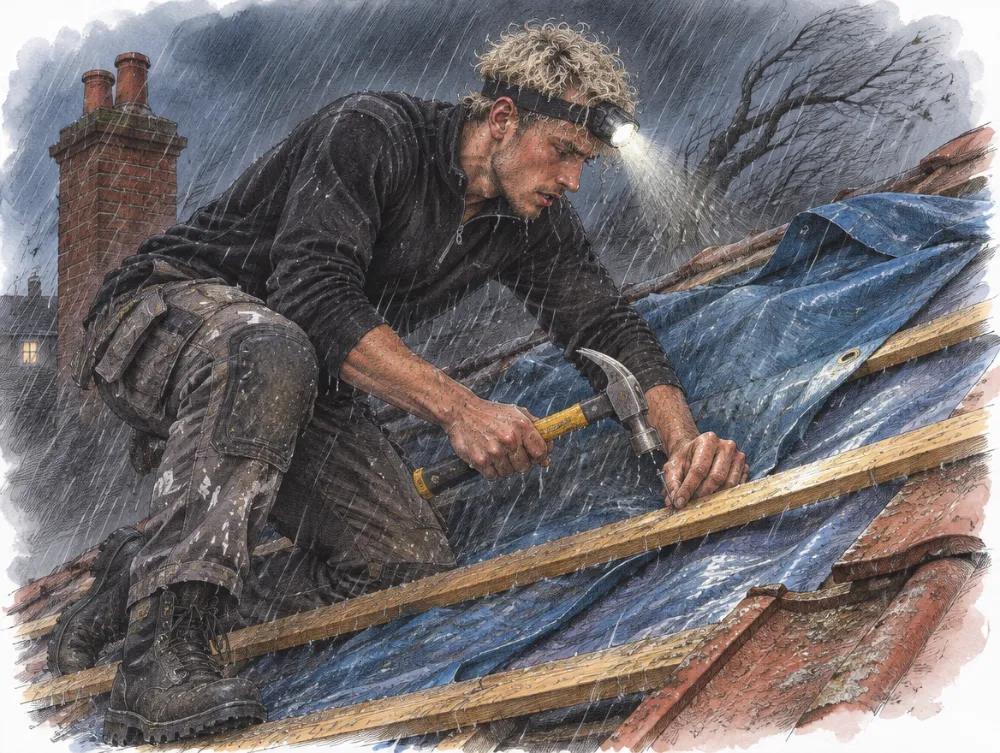
| Emergency make-safe or tarpaulin | £150 - £400 | Temporary cover until a proper repair |
| Sagging roof section | £1,000 - £3,000+ | Timber work, often with re-tiling |
Sources: MyJobQuote (October 2026), BestBuilders (September 2026) and Fantastic Services (2026), with ranges combined and rounded.
Where the guides didn't agree, we've shown the wider range rather than picking the cheapest number.
Slipped, cracked and missing tiles
The most common roof repair there is, and usually the cheapest.
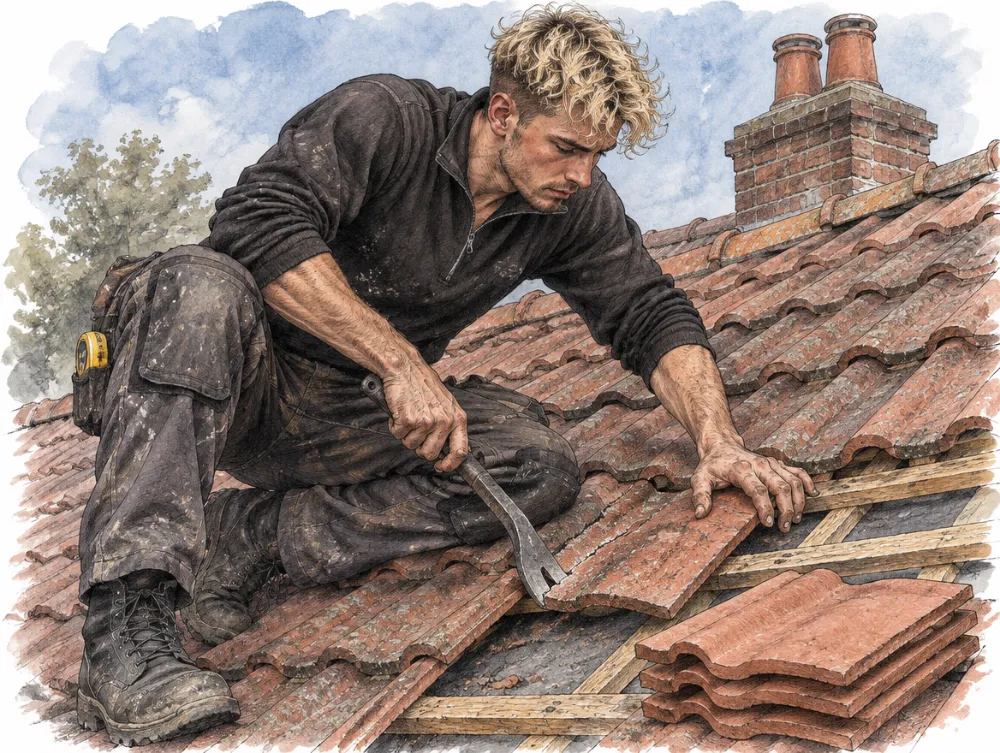
Expect £100 to £400 for a handful of tiles, depending on how easy they are to get to and whether you can still buy a match.
Old clay tiles can be hard to match.
A good roofer will sometimes pinch a tile from a hidden spot and put a new one there instead.
There's more detail in our guide to the cost to replace roof tiles.
Ridge tiles and hips
Ridge tiles run along the top of the roof.
On older roofs they're bedded on mortar, and that mortar cracks and crumbles over time.
Repointing or re-bedding a section usually costs £200 to £600, though Fantastic Services quotes up to £1,200 for bigger ridge jobs in 2026.
If the whole ridge is going, a mechanical fixing is often the better fix, which we cover in our dry ridge system guide.
Flashing and leadwork
Flashing is the strip of lead that seals the joint where the roof meets a chimney or wall.
When it lifts, cracks or the mortar falls out, rain runs straight down the inside of the wall.
Most flashing repairs cost £200 to £700, with chimneys at the top end because of the access.
Lead is still the long-lasting choice, though some roofers use lead alternatives where theft is a worry.
Flat roof patches
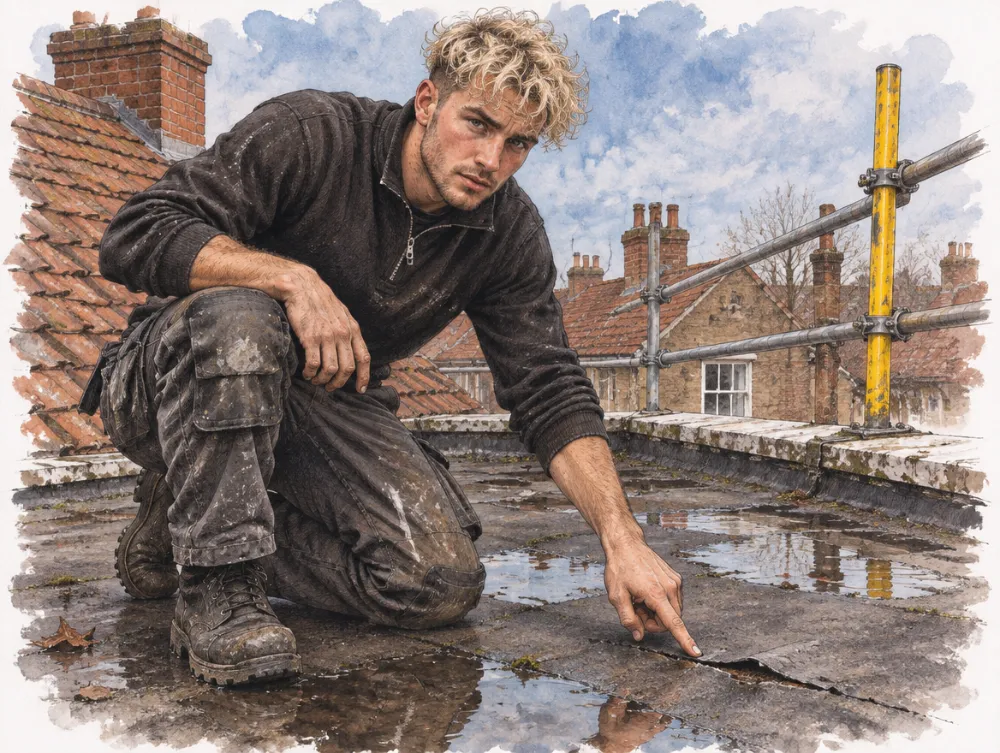
A small flat roof leak can often be patched for £150 to £800, depending on the material and how much has failed.
If a felt roof is blistered and cracked all over, patching it is throwing good money after bad.
If it's knackered, it's knackered.
EPDM rubber is Leo's speciality, and it's usually what he'll suggest when an old felt roof keeps leaking.
How much do roof repairs cost per square metre?
Bigger repairs are often priced by the square metre.
That's especially true on flat roofs, or when a patch of pitched roof is stripped and re-laid.
MyBuilder gives these rough figures by material.
| Roof covering | Repair cost per m² |
|---|---|
| Plain concrete tile | £90 - £120 |
| Fibre cement tile | £90 - £130 |
| Bitumen felt (flat) | £100 - £140 |
| Plain clay tile | £110 - £160 |
| EPDM rubber (flat) | £120 - £170 |
| GRP fibreglass (flat) | £130 - £180 |
| Natural slate (Spanish) | £150 - £220 |
MyBuilder doesn't date these, but they match the 2026 per square metre figures MyJobQuote gives for felt and GRP.
Small jobs rarely work out neatly per metre.
The roofer still has to turn up, set up access and clear away, whether the patch is one metre or five.
That's why one tile can cost more per square metre than a whole section.
Slate costs more because it's slower to fix and the material is dearer.
What else adds to the cost of a roof repair?
The repair itself is only part of the bill.
These are the extras that turn a £250 job into a £900 one.
Scaffolding and access
Scaffold is the big one.
Fantastic Services puts scaffold for a repair at £500 to £1,200 outside London in 2026.
MyJobQuote quotes £600 to £1,000 per week for a standard domestic scaffold.
A tower or smaller access setup for steep or chimney work tends to add £200 to £400, according to BestBuilders.
Some small jobs can be done safely off a ladder.
But the Health and Safety Executive says if a task means staying up a leaning ladder for more than 30 minutes at a time, other equipment should be used.
So if a roofer wants proper access for a two-hour job, that's him doing it right, not padding the bill.
Labour rates
MyJobQuote gives roofer labour rates of about £30 to £45 an hour in 2026.
Most roofers price small repairs as a fixed job rather than by the hour, which is easier for everyone.
Finding the leak
A damp patch on the ceiling is often nowhere near the hole in the roof.
Water gets in at one point and runs along a rafter or the felt before it drips.
BestBuilders lists leak finding at around £80 to £250 when it's charged on its own.
Materials, waste and surprises
Matching old tiles or slates can add £50 to £200.
A skip is around £150 to £300 if there's a lot of old material to get rid of.
The biggest surprise is usually rotten timber found once the tiles come off.
A fixed price should say what happens if that turns up, so nobody's arguing about it halfway through.
VAT
Plenty of small roofers trade below the VAT registration threshold, which has been £90,000 of taxable turnover since 1 April 2024, so they don't charge VAT.
A VAT-registered firm adds 20%.
Always check whether a quote includes VAT before you compare two prices.
Roofz guide
Roof repair cost in 2026
What common roof repairs cost, what adds to the bill, and when a repair stops making sense.
The headline numbers
£650
Average roof repair, 2026
£150-£1,000
Most everyday repairs
£500-£1,200
Scaffold, if needed
£30-£45
Roofer labour per hour
Common repairs: top of the typical price range
Extras that can be added
Repair or bigger job?
Usually a repair
- A few tiles off after a storm
- Loose mortar on one ridge section
- One leak with a clear cause
- One split seam on a flat roof
Usually a bigger job
- Tiles falling more and more often
- Ridge line visibly sagging
- The same leak keeps coming back
- Blisters and ponding all over a flat roof
Getting a fair repair price
- Spot it early. One slipped tile is cheap - wet battens and felt are not.
- Check the loft. Look for damp, daylight or soft timber after heavy rain.
- Get it looked at properly. A price should follow a proper look at the roof.
- Ask about access and VAT. Scaffold and 20% VAT change the total most.
- Get it in writing. One fixed price, with what happens if rot turns up.
Your quote should say
- Exactly what is being repaired
- Whether scaffold or access is included
- Whether VAT is included
- What happens if rotten timber is found
- How waste is taken away
- What guarantee you get, in writing
Does location change the price?
A bit, but less than people think.
Fantastic Services says London and the South East run roughly 20 to 30% higher than the rest of the country.
Outside that corner of England, the national ranges above are a fair guide.
What changes the price far more is the roof itself - height, pitch, how easy it is to get to and what it's made of.
A two-storey semi with a conservatory in the way is a very different job from a bungalow with a clear run down the side.
Travel matters a little on small jobs too, so a local roofer usually keeps the price sensible.
Roof repair or a new roof?
A repair makes sense when the problem is in one place and the rest of the roof is sound.
A new roof starts to make sense when repairs keep coming back, or the fault is in the structure rather than the covering.
| Sign | Usually a repair | Usually a bigger job |
|---|---|---|
| Tiles | A few slipped or cracked after a storm | Tiles falling regularly, worn and crumbly |
| Ridge | Loose mortar on one section | Ridge line visibly dipping |
| Leaks | One leak with a clear cause | Several leaks, or the same one coming back |
| Flat roof | One split or lifted seam | Blisters, cracks and ponding across the roof |
| Loft | A damp patch round a chimney | Daylight through the roof, soft or sagging timbers |
The Home Owners Alliance is blunt about it: a sagging roof is a sure sign it needs replacing, because it points to a problem with the timbers.
It also says replacing the odd failed tile can buy a few more years, but if tiles are coming down more and more often, it's probably time for a new roof.
MyJobQuote puts repairs to a sagging section at £1,000 to £3,000 or more.
The HOA quotes Checkatrade figures of £1,000 to £2,000 for adding extra joists.
If you're leaning towards replacing, our guide to how much a new roof costs has the full picture.
Do roof repairs need building regulations approval?
Most repairs don't.
The Planning Portal says you won't normally need a building control application for repairs or re-covering if less than 25% of the total building envelope and less than 50% of the roof is affected.
You would need approval if you go past those limits, make structural changes, use a covering that performs very differently in a fire, or use one that's 15% or more heavier than the old one.
Go past the limits and the Planning Portal warns that work to the whole roof may be needed, including making sure the insulation is up to scratch.
Listed buildings and conservation areas have extra rules, so check with the council before you change materials.
That's general information, not legal advice, and building control has the final say.
Want Leo to have a look?
Free survey, one fixed price in writing, and no hard sell. Wisbech, Peterborough and the Fens.
Will home insurance pay for a roof repair?
Sometimes.
It depends on what caused the damage.
Buildings insurance generally covers sudden events, like tiles ripped off in a storm or a tree coming down on the roof.
It generally doesn't cover wear and tear, or damage that built up slowly because something wasn't fixed.
Lemonade says insurers typically want winds of around 55 mph before they treat it as a storm, though the exact figure varies by policy.
It puts it simply: if a roof was already in poor shape and fails in a storm, that's wear and tear, not storm damage.
If you do claim, Confused.com says photograph every affected area, keep any maintenance records, and get on to your insurer quickly.
Urgent work to stop more damage can usually go ahead straight away, but for anything else, wait for the insurer to agree.
A dated photo report from a roofer helps, and BestBuilders puts those at around £80 to £250.
Your policy wording is what counts, so read it or ring your insurer before relying on any of this.
Roof repairs in Peterborough and the Fens
Fenland roofs take a hammering from the wind.
The land is flat and open from Wisbech out to March, Chatteris and Whittlesey, so there's nothing to break the wind before it hits a roof side-on.
That's why loose ridges, lifted verges and slipped tiles are the most common call-outs after a rough night.
The ground plays its part too.
The British Geological Survey says Oxford Clay underlies much of the Peterborough district, beneath the Fen silts, clays and peat.
Clay shrinks in dry summers and swells in wet winters, and over the years that movement can open up cracks in brickwork and around chimneys and flashings.
The housing round here has its own patterns.
There are a lot of 1960s to 1980s bungalows across the area, which is good news for repair bills, because a low roof often needs less access kit.
Ex-council semis around Peterborough, Spalding and King's Lynn often still have their original concrete tile roofs, and mortar ridges and verges that old usually want attention.
Holbeach, Long Sutton and Downham Market have plenty of the same, often with a flat-roof extension tacked on the back.
Older brick terraces in Peterborough and Wisbech tend to have chimneys, lead valleys and back additions where leaks start.
Flat-roof garages from the same era are everywhere too.
Some old cement sheet garage roofs contain asbestos, so they should be tested before anyone drills, cuts or pressure washes them.
MyJobQuote puts an asbestos survey at around £325, and our post on garage roof replacement covers it properly.
If you're in a conservation area, repairs need more thought.
Wisbech's conservation area takes in the North Brink and South Brink and has 223 listed buildings, and Peterborough city centre is a conservation area as well.
Matching old tiles and slates matters there, and listed buildings may need consent for changes, so talk to the council first.
If you're looking for a roofer in Wisbech, Peterborough or anywhere in the Fens, Roofz covers the lot.
How to keep roof repair costs down
The cheapest repair is the one you catch early.
- Deal with the first slipped tile. One missing tile lets water reach the batten and felt, and that's when a £150 job turns into a £600 one.
- Look in the loft after heavy rain. A torch and two minutes tells you more than staring at the ceiling.
- Keep the gutters clear. Overflowing gutters soak fascias and walls, and they're one of the cheapest things on this list to sort.
- Do jobs together. If scaffold's going up for a chimney, get the ridge and gutters looked at the same time.
- Get a fixed price in writing. It should say what's in, what's not, and what happens if rotten timber turns up.
How to choose a roofer for a repair
A good roofer looks at the roof before pricing it, tells you what he found and puts the price in writing.
Be wary of anyone who knocks on the door to tell you your roof's in trouble, wants a big cash deposit or needs an answer today.
Ask for photos of the problem.
A genuine roofer will happily show you what he saw up there.
Check they've got public liability insurance, and ask what guarantee comes with the repair.
Our guide to spotting cowboy builders has the full list of warning signs.
Roofz gives you a free survey, one fixed price in writing and a written guarantee.
Roof repair cost: the short version
Most common roof repairs in 2026 cost £150 to £1,000, and the average is around £650.
Tile and ridge jobs are at the cheap end, while valleys, chimneys and sagging sections cost more.
Scaffold is the biggest extra, and VAT may or may not be included, so check every quote line by line.
If the same problem keeps coming back, or the roof is sagging, get a proper opinion on whether to repair or replace.
Book a free roof survey and Leo will tell you straight what your roof needs, and what it doesn't.
The grumpy rain cloud won't be pleased, but that's not our problem.
Questions people ask
How much does it cost to replace one roof tile?
A single tile is usually priced as a small job, so expect the low end of the £100 to £400 range quoted for a few tiles in 2026. Most of the cost is getting up there safely, which is why fixing several tiles in one visit is better value.
Is it cheaper to repair or replace a roof?
A repair is almost always cheaper in the short term if the problem is local. If the roof is sagging, leaking in several places or shedding tiles regularly, repeated repairs can end up costing more than replacement over a few years.
Do roofers charge VAT on repairs?
Only if they are VAT registered, which is compulsory once taxable turnover passes £90,000 a year. Many small roofers are below that, so always ask whether a quote includes VAT before comparing prices.
How long does a typical roof repair take?
Small jobs like a few tiles or a short run of ridge are often done in a few hours to a day. Larger work such as valleys, chimneys or timber repairs can take several days, especially if scaffold is needed.
Can roof repairs be done in winter?
Many repairs can, as long as the roof is dry enough to work on safely. Mortar work and some flat roof materials need suitable temperatures, so a roofer may make the roof watertight first and finish the job when the weather allows.
How much does a roof repair cost in Peterborough?
Outside London the 2026 national ranges are a fair guide, so most common repairs in Peterborough and the Fens run £150 to £1,000 before scaffold. Roofz covers Wisbech, Peterborough and the Fens and gives one fixed price after a free survey.
Sources
- MyJobQuote - Roof Repair Cost (October 2026)
- BestBuilders - How much does a roof repair cost in 2026
- Fantastic Services - How much does roofing cost? 2026 price guide
- MyBuilder - Roof repair cost guide
- Home Owners Alliance - Does my roof need replacing?
- Planning Portal - Building regulations: work to an existing roof
- HSE - How and when to use a ladder at work
- GOV.UK - Increasing the VAT registration threshold
- Lemonade - Does home insurance cover storm damage?
- Confused.com - Roof repairs and home insurance
- British Geological Survey - Geology of the Peterborough district
- Heritage Check - Wisbech Conservation Area
- Peterborough City Council - City Centre Conservation Area Appraisal report (2017)
Prices are guide figures from the sources above and vary by job. Your free survey gives one fixed price in writing.