A torch on felt roof is a flat roof built from layers of modified bitumen felt, melted down with a gas torch so each layer welds to the one below.
Laid properly, a three-layer torch-on roof lasts about 15 to 20 years, going by 2026 guides from MyBuilder and Checkatrade.
Expect to pay roughly £60 to £80 per square metre for three-layer torch-on in 2026, which is about £700 to £1,500 for a single garage.
It's a proven system and it does the job.
But it means a naked flame on your roof, and rubber EPDM now lasts a lot longer for not much more money.
Here's how torch-on works, what it costs, how long it lasts, the fire rules, and when it's still the right call.
What is a torch on felt roof?
Torch-on felt is what the trade calls a reinforced bitumen membrane.
That's roofing felt with a tough carrier sheet inside it, usually polyester or glass fibre.
The bitumen is modified with polymers, usually SBS, so it stays flexible in the cold and doesn't crack as the roof moves.
The underside of each roll has a thin film on it.
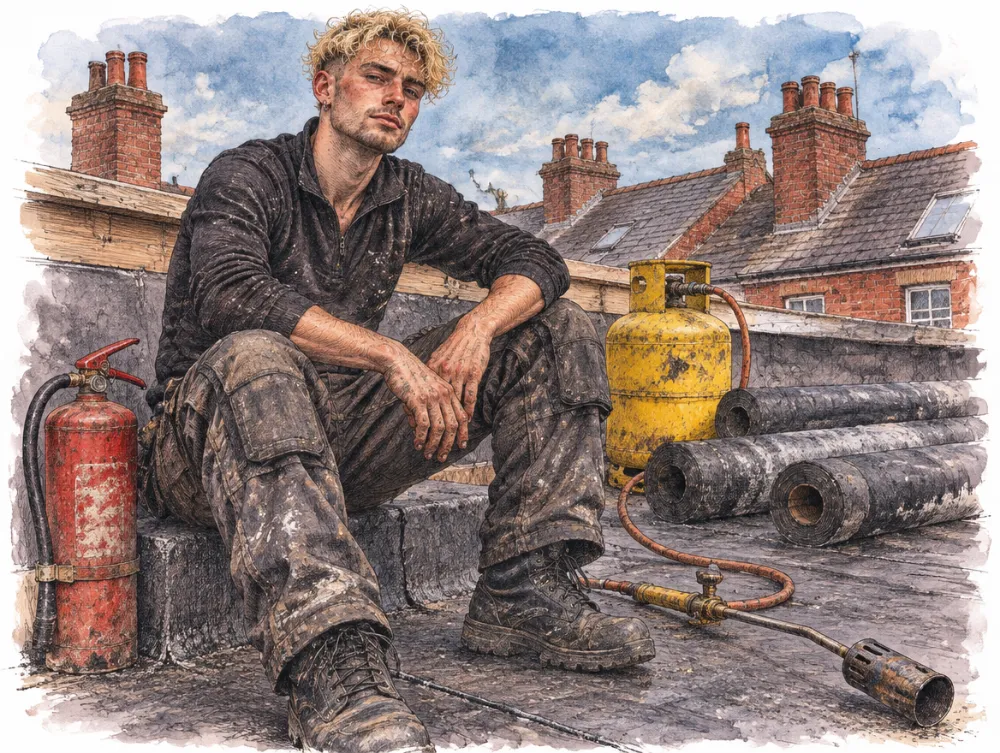
The roofer runs a propane torch across that film, it burns off, the bitumen goes soft, and the roll gets pressed down onto the layer below.
Once it cools, the layers act as one thick waterproof sheet.
It replaced the old method of boiling tar in a pot and pouring it on, which nobody misses.
The three layers
A normal domestic torch-on roof has three layers, and each one has a job.
- Base or venting layer: fixed to the deck, it lets trapped moisture escape and gives the rest something to bond to.
- Underlay: a sheet of about 2mm, torched onto the base layer, doing most of the waterproofing.
- Cap sheet: a sheet of about 4mm with mineral granules on top, which stop the sun cooking the bitumen.
Roofing Superstore's guide describes exactly that build-up.
Some makers sell two-layer systems, and SIG's 2025 FIX-R installation guide works on an underlay plus a cap sheet.
Either can work.
What doesn't work is one thin layer of shed felt tacked onto a house extension, because that's a bodge.
How much does a torch on felt roof cost?
Straight answer: about £60 to £80 per square metre for three-layer torch-on, fitted, according to MyBuilder's 2026 price guide.
Checkatrade's flat roof guide, updated February 2026, puts torch-on at an average of £65 per square metre plus VAT, inside a wider felt range of £50 to £80.
Higher-grade SBS systems cost more, at about £80 to £120 per square metre according to MyBuilder.
| Job | Typical 2026 price |
|---|---|
| Shed roof re-felt | £250 to £450 |
| Porch or bay window roof | £350 to £700 |
| Small outbuilding | £500 to £800 |
| Single garage flat roof | £700 to £1,500 |
| House extension or dormer flat roof | £1,500 to £4,500 |
| Patch repair (around 4m²) | From about £200 |
Those are MyBuilder's 2026 figures for straightforward jobs.
Roofz doesn't do price lists, because no two roofs are the same.
The free survey gets you one fixed price in writing, and that's the price you pay.
What pushes the price up
The felt is only part of the bill.
- Stripping the old roof: old felt and chippings take time to get off and fill skips, and Checkatrade puts a skip at around £300.
- Rotten decking: if the boards are soft, they come out, because you don't lay a new roof on a rotten deck.
- Insulation: turning a cold roof into a warm roof adds insulation boards and can bring in Building Regulations.
- Access: a two-storey extension may need scaffold, which Checkatrade puts at about £900 a week.
- Edges and upstands: new trims, wall flashings and outlets all add up.
- Labour: MyBuilder puts torch-on work at about £200 to £350 a day.
For the full side-by-side on flat roof prices, see our flat roof replacement cost guide.
Roofz guide
Torch on felt roofs at a glance
What it costs, how long it lasts, how it is laid and how it stacks up against EPDM rubber in 2026.
Typical 2026 prices
£60-£80
Per m², three-layer torch-on felt
£700-£1,500
Single garage flat roof
£1,500-£4,500
House extension flat roof
15-20 yrs
Typical torch-on lifespan
Cost per m² by material (top of range)
Lifespan by material (top of range)
How a torch-on roof is laid
- Survey. Check the deck, falls and fire risks.
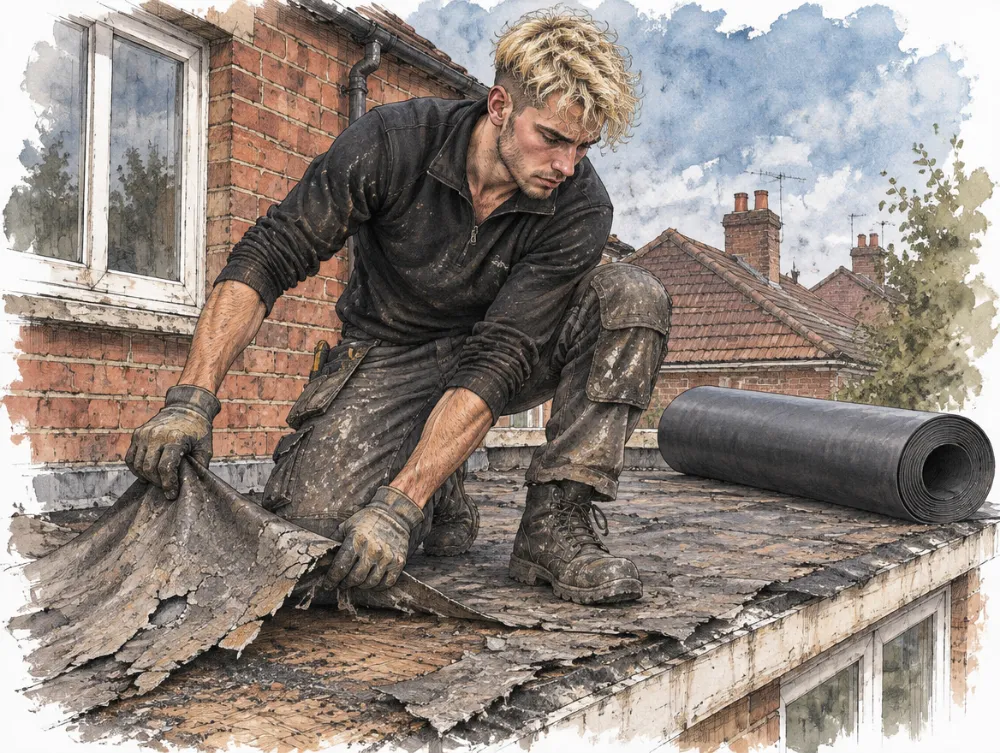
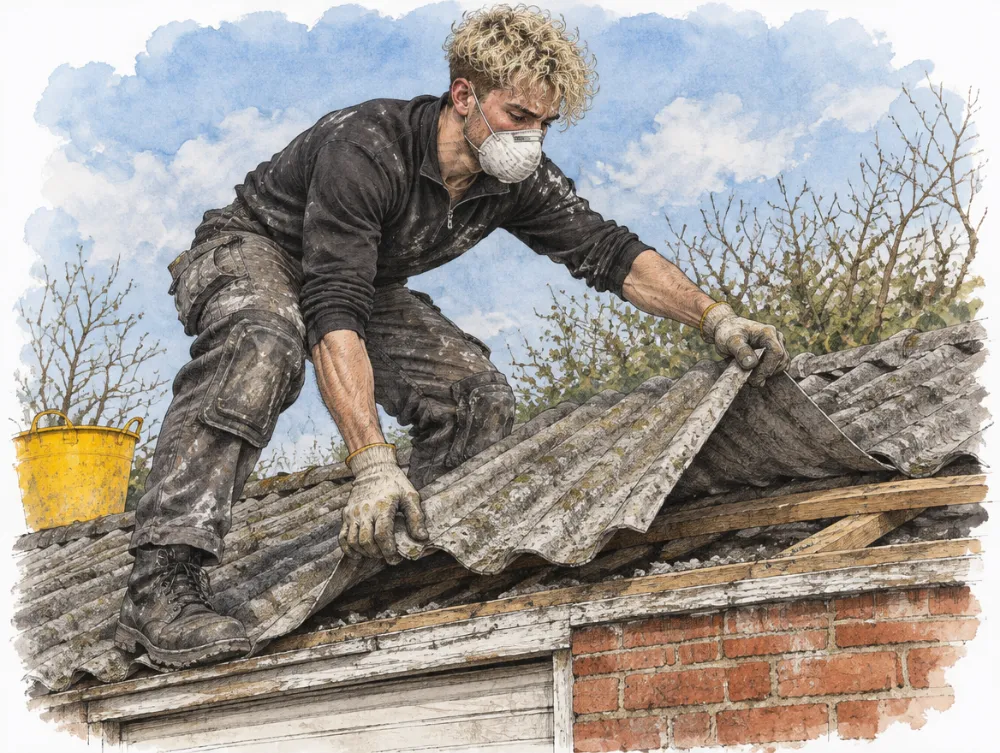
- Strip. Remove the old covering and check for rot.
- Base layer. Self-adhesive or nailed over timber, never torched onto it.
- Underlay. Torched onto the base layer, laps staggered.
- Cap sheet. Mineral finish torched on, end laps at least 100mm.
- Finish. Trims, upstands and outlets, then a final check.
Torch-on felt vs EPDM
Torch-on felt
- £60-£80 per m²
- 15-20 years
- Layers with overlapping joints
- Needs a naked flame
- Good on concrete decks and tight budgets
EPDM rubber
- £70-£100 per m²
- 30-50 years
- Often one seamless sheet
- Glued down cold, no flame
- Leo's speciality
Safe2Torch checklist
- Fire risks assessed at survey stage
- Torch-free zone of at least 900mm from any risk
- No flame applied directly to timber decks or upstands
- Self-adhesive or fixed base layer over timber
- Insurance that covers hot works
How long does a torch on felt roof last?
A well-laid three-layer torch-on roof should give you 15 to 20 years, according to both MyBuilder and Checkatrade in 2026.
Basic single-layer mineral felt is more like 10 to 15 years.
Manufacturers back their systems with material warranties, and SIG's 2025 guide lists 10, 15 and 20 year options depending on the system.
Those warranties only count if the roof is laid to BS 8217, the British Standard code of practice.
What kills a felt roof early
- Ponding: water sitting in puddles for days wears the surface, so the roof needs a proper fall to its outlet.
- Bad laps: SIG says end laps must be at least 100mm, and a bead of bitumen should squeeze out of every joint.
- Sun: UV hardens bitumen, which is why the mineral cap sheet matters.
- Blocked outlets: leaves in the outlet send the water back across the roof.
MyBuilder suggests getting a flat roof checked every two to three years.
That's cheap compared with a new ceiling.
Is torch-on felt safe?
Yes, if it's laid by someone trained who follows the industry fire rules.
It's not a job for a borrowed gas torch and a free Saturday.
Roof fires from gas torches are why the National Federation of Roofing Contractors (NFRC) brought in its Safe2Torch guidance, which IKO says affects at least half of all flat roofs installed.
What Safe2Torch says
- Assess the risk first: fire risks get spotted at survey stage, and where one exists or can't be ruled out, that area goes torch-free.
- Keep a torch-free zone: IKO's Safe2Torch guidance sets torch-free areas at no less than 900mm from any identifiable risk.
- Never torch onto timber: a torch should never go directly onto a timber deck or timber upstands, even if they're primed.
- Different base over timber: a self-adhesive or mechanically fixed base layer goes down first.
- Torch-free products near hazards: cold-applied or self-adhesive membranes get used near vents, soffits, rooflights and anything that burns.
Most house and garage flat roofs have timber decks, so this applies to nearly every domestic job.
If a roofer starts torching straight onto your boards, stop the job.
Want Leo to have a look?
Free survey, one fixed price in writing, and no hard sell. Wisbech, Peterborough and the Fens.
Torch on felt vs EPDM: which is better?
For most homes, EPDM rubber is the better long-term buy.
Torch-on felt is the cheaper option that still does a decent job.
Checkatrade's 2026 guide puts EPDM at £80 to £100 per square metre with a 30 to 50 year lifespan, against felt at £50 to £80 and 15 to 20 years.
| Torch-on felt | EPDM rubber | GRP fibreglass | |
|---|---|---|---|
| Typical cost per m² (2026) | £60 to £80 | £70 to £100 | £80 to £120 |
| Typical lifespan | 15 to 20 years | 30 to 50 years | Up to 30 years |
| Joints | Overlapping layers | Usually one seamless sheet | Seamless resin coat |
| Naked flame needed | Yes | No | No |
Costs and lifespans come from Checkatrade and MyBuilder's 2026 guides.
EPDM is glued down cold, so there's no flame anywhere near your timber.
On a garage or small extension it usually goes on as one sheet with no joints, so there are fewer places for water to get in.
Over 30-odd years you'd likely re-felt twice, which makes the extra cost of rubber look small.
Felt still has its place, though.
- Tight budgets: on a shed or outbuilding, felt is cheaper and perfectly good enough.
- Concrete decks: torch-on bonds well to primed concrete, where the timber fire risk doesn't apply.
- Weather: Roof Giant points out torch-on can be laid at any time of year, which helps when the weather won't play ball.
EPDM is what Roofz specialises in, and our EPDM roof cost guide has the full breakdown.
Weighing up fibreglass too? Our fibreglass roof cost guide compares it properly.
How is a torch on felt roof installed?
MyBuilder says a single garage re-felt takes about a day for two people, and Checkatrade says a flat roof extension usually takes one to three days.
- Survey: check the deck, the falls, the edges and any fire risks, and mark which areas go torch-free.
- Strip: get the old covering off and check the deck for rot.
- Fix the deck: replace soft boards, then clean and dry the surface.
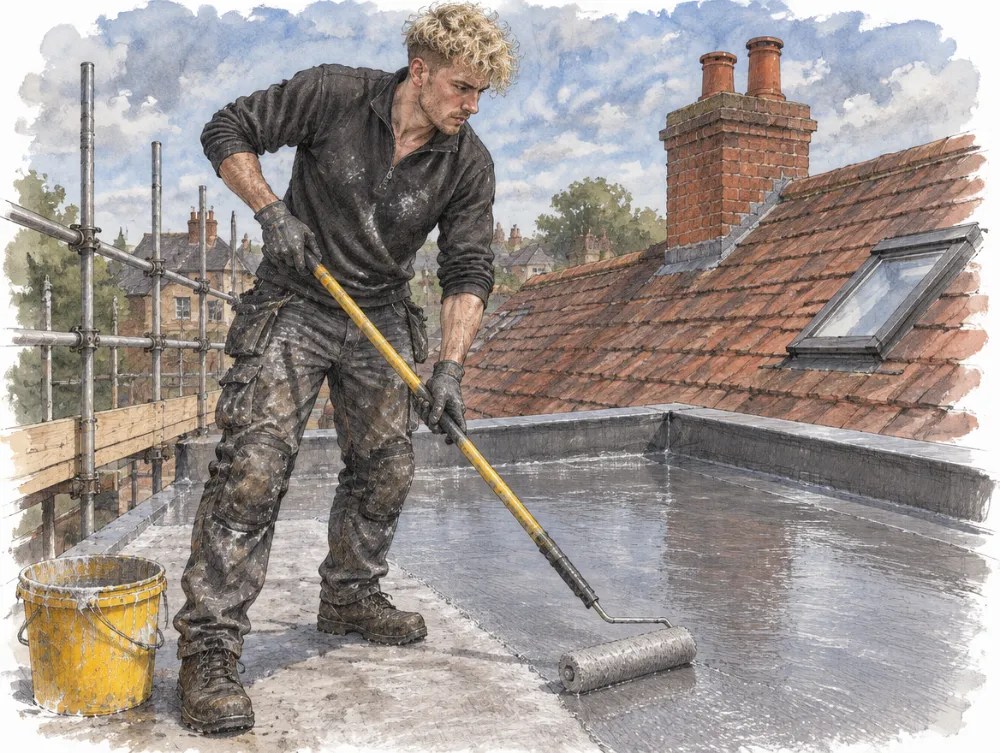
- Base layer: self-adhesive or fixed over timber.
- Underlay: torched onto the base layer, with the laps staggered.
- Cap sheet: torched on top, with every lap sealed so a bead of bitumen shows.
- Details: trims, upstands, wall flashings and outlets finished off.
- Final check: look for open laps and anything still warm before leaving.
Can new felt go over an old felt roof?
Sometimes, if the old one is flat, dry and stuck down firm.
If it's blistered, wet or spongy, it comes off, because covering a wet roof just seals the problem in.
Do you need Building Regulations for a new felt roof?
Often, yes.
Replacing the waterproofing on a flat roof counts as renovating it under Part L of the Building Regulations in England.
Bauder's Part L 2021 guide explains the whole roof should meet the renovation insulation standard when more than 50% of that roof surface is renovated.
If that's not technically possible, or won't pay back within 15 years, the insulation should be upgraded as far as reasonably possible.
A patch repair or overlay is treated as a repair, not a renovation.
Horsham District Council's guidance notes that roofers in the NFRC's Competent Roofer scheme can self-certify, so you don't need to apply to Building Control yourself.
Ask any roofer how sign-off will be handled before work starts, and see our building regulations for roof replacement guide for more.
Flat roofing in Peterborough and the Fens
Flat roofs round here have a hard life.
The Fens are flat and open, and the wind comes across the fields with nothing to stop it.
Loose edges and badly stuck laps are where storm damage starts, and on an exposed plot outside March or Chatteris the wind finds every one of them.
There are a lot of 1960s to 1980s bungalows, ex-council semis and flat-roof garages around Wisbech, Whittlesey, Spalding and Holbeach, and plenty are on their second or third felt roof.
Older brick terraces in Peterborough and Wisbech often have flat-roofed rear extensions that were felted decades ago and patched ever since.
The clay soils across much of the area shrink in dry summers and swell in wet winters.
That movement can open up cracks where a felt roof meets a wall, so check the upstands, not just the middle of the roof.
On most of these jobs the real question is whether the deck is still sound and whether it's worth going to EPDM this time round.
If you're looking for flat roofing in Peterborough, Wisbech, King's Lynn, Ely, Huntingdon or Stamford, Roofz covers the lot.
Signs your felt roof needs attention
- Blisters or bubbles in the surface.
- Cracks or crazing, especially at the edges and upstands.
- Bald patches where the granules have worn off.
- Puddles still there two days after rain.
- Damp patches or stains on the ceiling below.
One small blister isn't an emergency.
Several of these together usually mean the roof's had it.
If water's already coming in, our flat roof leak repair guide covers whether to patch or replace.
How to pick a roofer for a felt roof
- Get it in writing: the quote should list the layers, the product and what happens to the old roof.
- Ask about the deck: find out how they'll price rotten boards if they find any.
- Ask about fire safety: will they torch onto timber, which areas go torch-free, and does their insurance cover hot works?
- Ask about the guarantee: what's covered, for how long, and is there a manufacturer's warranty on top?
A decent roofer will tell you straight whether felt or rubber suits your roof, not just sell you whichever is quickest to fit.
The short version
A torch on felt roof costs about £60 to £80 per square metre in 2026 and lasts around 15 to 20 years.
It has to be laid by someone who follows Safe2Torch, and the flame should never touch a timber deck.
EPDM rubber costs a bit more but can last twice as long, with no flame at all.
Book a free survey and Leo will tell you which suits your roof, with one fixed price in writing and a written guarantee.
Questions people ask
Can you lay torch on felt in winter?
Yes, torch-on felt can be laid at most times of year as long as the deck is dry, which is one reason it has stayed popular. Very wet or frosty days still stop work, because moisture trapped under the layers causes blisters later.
Is torch on felt better than shed felt?
Yes, by a long way. Basic nailed shed felt is a single thin layer that typically lasts 10 to 15 years, while a three-layer torch-on system is bonded together and usually lasts 15 to 20 years.
Can I torch on felt myself?
It is not a sensible DIY job, because it uses an open flame on what is usually a timber roof. Industry Safe2Torch guidance says the flame should never touch a timber deck, and getting the laps and edges right takes practice.
How many layers should a torch on felt roof have?
A standard domestic system has three layers: a venting or base layer, an underlay and a mineral cap sheet. Some manufacturers offer two-layer systems with just an underlay and cap sheet.
Does a torch on felt roof need maintenance?
Very little, but outlets and gutters should be kept clear and the roof looked over every two to three years. Catching a small blister or open lap early is much cheaper than fixing the ceiling below.
Can you put EPDM over an old felt roof?
Sometimes, if the old felt is flat, dry and firmly bonded, but most installers prefer to strip back to the deck so they can check for rot. A survey will tell you which applies to your roof.
Do you fit flat roofs in Wisbech, March and King's Lynn?
Yes. Roofz covers Wisbech, Peterborough and the Fens, including March, Whittlesey, Chatteris, Ely, Spalding, Holbeach, Long Sutton, King's Lynn, Downham Market, Market Deeping, Stamford and Huntingdon, with a free survey and one fixed price in writing.
Sources
- MyBuilder - Roof re-felt cost price guide (2026)
- Checkatrade - Flat roof replacement costs (updated February 2026)
- Roofing Superstore - Torch on felt roofing essentials
- SIG Roofing - FIX-R Torch On Felt Installation Guide (February 2025)
- Roof Giant - Why should I buy torch on roofing felt
- IKO - Technical guidance: Safe2Torch
- IKO - What is Safe2Torch guidance?
- Bauder - New Part L 2021 (England)
- Horsham District Council - Guidance for re-roofing projects
- HSE - Diagrams showing where asbestos can occur in buildings
Prices are guide figures from the sources above and vary by job. Your free survey gives one fixed price in writing.