Roof moss removal is only worth paying for when the moss is thick, blocking your gutters or holding water against the tiles.
A light green film on an older roof is normal and can be left alone.
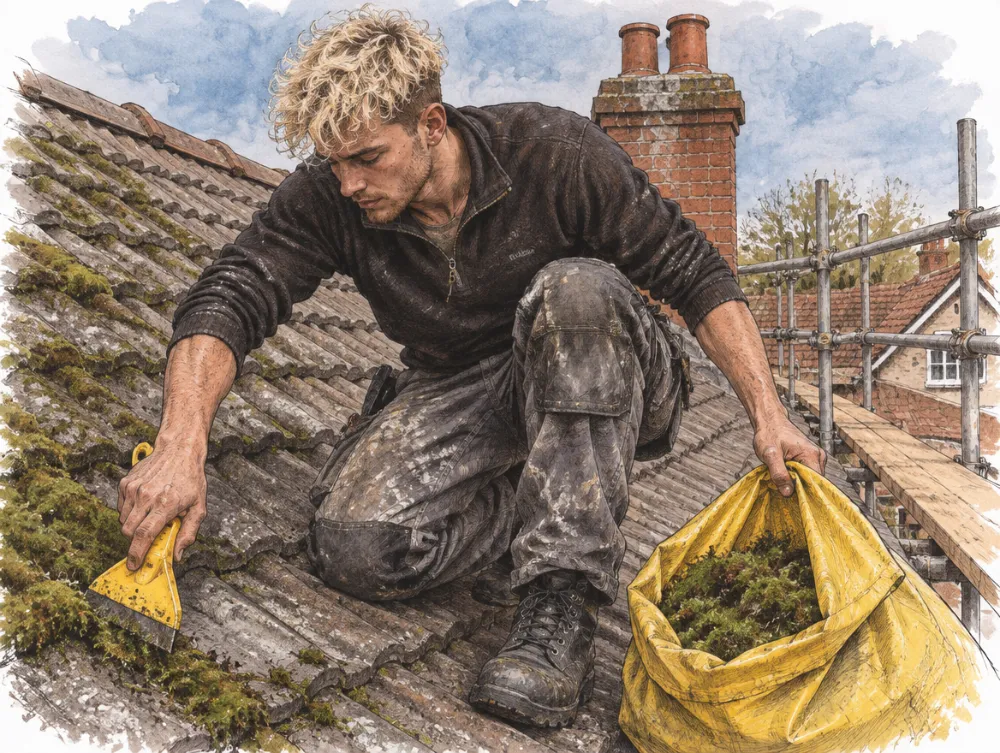
When it does need to come off, it gets scraped off by hand and treated with a biocide.
It does not get blasted with a pressure washer, because the National Federation of Roofing Contractors (NFRC) says that can force water into the roof space.
In 2026, moss removal on a typical house costs £300 to £700, more on a big detached house or where scaffold is needed.
Here's how to tell if yours needs doing, what the methods are, what it costs, and how to stop it coming straight back.
Is moss bad for your roof?
A bit of moss won't hurt.
Marley, one of the biggest tile makers in the country, says low to moderate moss or lichen is a natural part of a pitched roof ageing.
Its advice is to leave it alone unless the roof is leaking or the gutters are blocked.
Thick moss is a different matter.
Marley warns that heavy build-ups hold water on the tiles, which raises the risk of leaks and wears the tiles out faster.
Wienerberger, which makes clay tiles, says moisture held by moss can make clay tiles delaminate, where the face of the tile flakes away from the body.
It also says moss in the interlocks blocks the channels that carry water off, and that hairline cracks open up in freeze-thaw weather.
Then every time it rains, lumps of it wash into the gutters and block them.
When it needs to come off
- Thick cushions of moss sitting on the tiles, not just a thin green film.
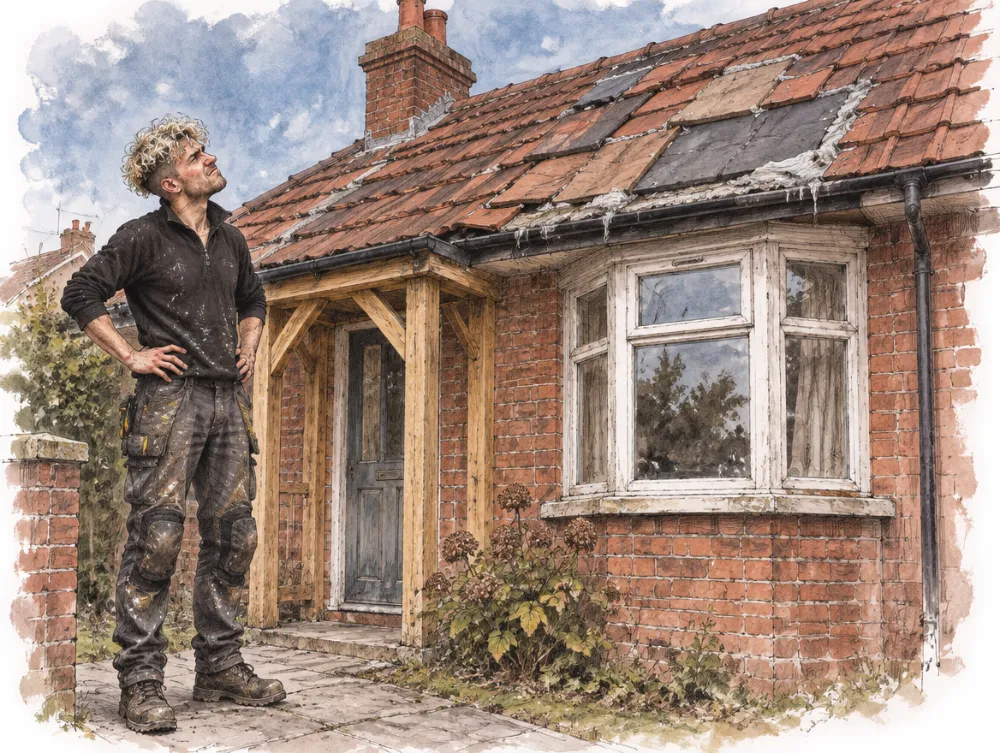
- Tiles lifting, or moss packed into the gaps and interlocks.
- Gutters filling up with moss soon after they've been cleaned.
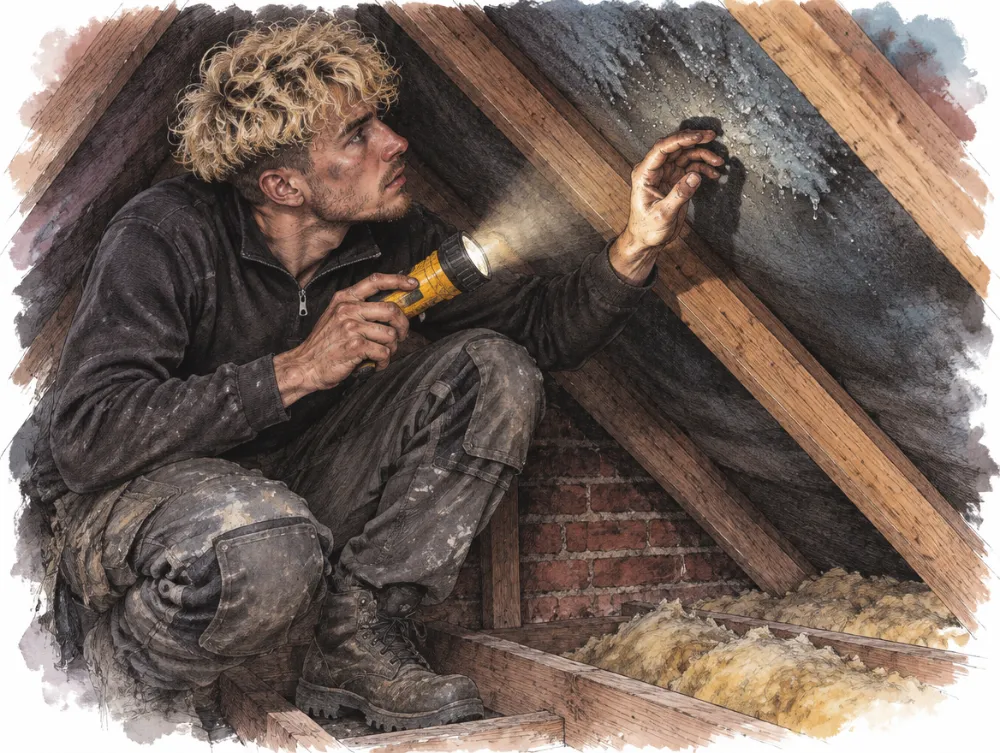
- A damp patch or leak in the loft under a mossy patch.
- Repairs planned anyway, so the roofer can see what's underneath.
If none of that applies, leave it and keep an eye on the gutters.
Don't let anyone talk you into a full clean you don't need.
How much does roof moss removal cost in 2026?
MyJobQuote puts roof moss removal at £300 to £700 in October 2026.
Checkatrade gives a rough guide of £5 to £15 per square metre.
Book A Builder UK's June 2026 guide breaks it down by house type, based on contractor quotes across Great Britain.
| House type | Moss removal only | Soft wash treatment | Full clean with biocide |
|---|---|---|---|
| Terraced | £300 - £500 | £450 - £700 | £500 - £800 |
| Semi-detached | £400 - £700 | £600 - £950 | £700 - £1,200 |
| Detached | £600 - £1,000 | £900 - £1,400 | £1,100 - £1,800 |
Those figures assume normal access on a two-storey house.
A bungalow usually comes in cheaper, because there's less roof and you often don't need scaffold.
Extras to budget for
The moss is only part of the bill.
| Extra | Typical 2026 cost |
|---|---|
| Biocide treatment on its own | £150 - £400 |
| Scaffold, one elevation (front or back) | £400 - £700 |
| Scaffold, full wrap | £700 - £1,200 |
| Extra scaffold lifts for three storeys | £200 - £500 |
| Gutter clean afterwards | £50 - £150 |
| Waste removal | £50 - £200 |
All figures are from Book A Builder UK (June 2026).
Make sure the gutters are cleared as part of the job.
Everything you scrape off the roof lands in them, and a moss job that leaves the gutters full isn't finished.
Our guide to gutter cleaning cost covers that side of it.
What pushes the price up
- Height. Two or three storeys means more access kit and more time.
- Roof size and shape. Hips, valleys, dormers and chimneys all slow the job down.
- How bad it is. Ten years of moss takes a lot longer than two.
- Tile type. Old clay tiles and slate need more care than modern concrete tiles.
- Repairs found on the day. Cracked or slipped tiles under the moss are extra.
Roofz guide
Roof moss removal in 2026
When moss needs to come off, how to do it without wrecking the tiles, and what it costs.
The numbers
£300-£700
Moss removal, typical house
£5-£15
Per square metre
£150-£400
Biocide treatment
£400-£700
Scaffold, one elevation
Full clean with biocide, by house type (top of range)
Cost by method (top of range)
Does it need to come off?
- Thick cushions, not a thin green film
- Tiles lifting or interlocks packed with moss
- Gutters filling up soon after a clean
- Damp or a leak in the loft below
- Repairs planned on the roof anyway
Proper job vs bodge
Proper job
- Scraped by hand
- Worked off boards or roof ladders
- Biocide on a dry day
- Gutters cleared after
Bodge
- High-pressure jet wash
- Boots straight on the tiles
- Runoff down the drain
- Coating sold on the doorstep
Stopping it coming back
- Copper or zinc strips near the ridge act as a natural biocide.
- Cut back trees to let in light and air.
- Keep gutters clear so the eaves dry out.
- Check every few years and brush off early growth.
Roof moss removal methods compared
There are four main ways to get moss off a roof.
They are not equal.
| Method | How it works | 2026 cost | Verdict |
|---|---|---|---|
| Hand scraping | Moss removed with scrapers and brushes, working off boards or roof ladders | £300 - £800 | The NFRC's recommended method |
| Biocide treatment | Sprayed on to kill what's left and slow regrowth | £150 - £400 | Best straight after scraping |
| Soft washing | Low-pressure cleaning solution that breaks down moss, algae and lichen | £400 - £1,200 | Gentler, but runoff needs managing |
| Pressure washing | High-pressure jet blasts the moss off | £250 - £700 | Not recommended by the NFRC or tile makers |
Prices are from Book A Builder UK (June 2026).
Hand scraping
Slow, careful and the right way to do it.
The NFRC's guidance note on moss says to scrape it off by hand, working from properly supported crawling boards or ladders that spread the weight.
That's to stop tiles cracking.
Walking straight on the tiles is how hairline cracks start, and those cracks open up every winter.
Biocide treatment
Scraping leaves roots and spores behind.
A biocide kills what's left and slows the moss coming back.
Wienerberger points out these treatments aren't permanent, so the roof still needs checking.
The NFRC and Marley both warn that chemical washes can harm plants and animals.
Gutters and outlets should be protected, and nothing should run into drains, ponds or ditches.
That matters round here, where plenty of gardens back onto drains and dykes.
Soft washing
Soft washing uses a cleaning solution at low pressure to break down moss, algae and lichen.
It's gentler than a jet wash and can bring some colour back to the tiles.
The runoff still needs handling properly.
What a proper job looks like
- Access set up first. Roof ladders, crawl boards or scaffold, depending on the height and pitch.
- Gutters and outlets protected. So muck and chemicals don't go straight down the drain.
- Moss scraped off by hand. Working down the roof, tile by tile, without standing on them.
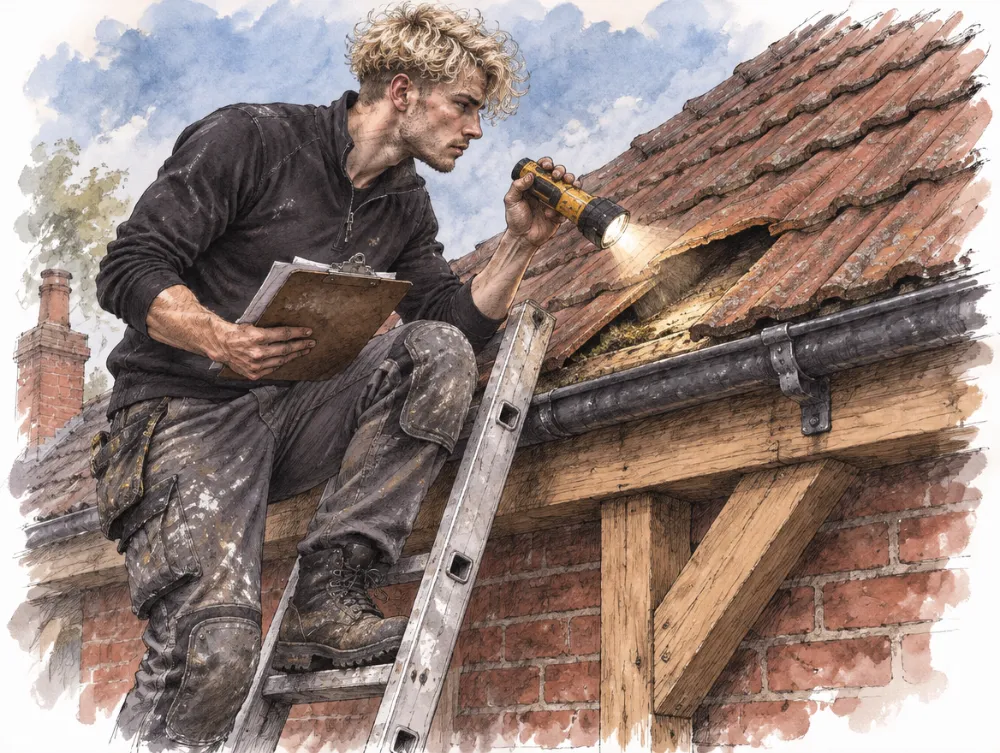
- Tiles checked as they're uncovered. Cracked, slipped or loose ones get pointed out.
- Biocide applied. On a dry day, so it isn't washed straight off.
- Gutters and downpipes cleared. Then the ground below is tidied up.
- Photos before and after. So you can see what was done without going up there.
If someone's planning to skip half of that, the low price is why.
Ask any roofer in Peterborough or the Fens to talk you through their method before you book.
Why you shouldn't pressure wash a roof
This is the big one.
Usually someone has just knocked on the door offering a cheap jet wash.
The NFRC says it's not recommended to remove moss by pressure washing, because it can force water into the roof space.
Marley says pressure washing isn't recommended by most roofing professionals, and that high pressure can damage tiles, especially older ones.
Wienerberger says it's crucial to avoid high-pressure jet washers, which can damage the finish, strip the colour off concrete tiles and drive water into the interlocks.
If a pressure washer is used at all, Wienerberger says keep it on low pressure and work from the top down, never upwards.
A clean roof that now lets water in is a bodge, not a bargain.
Should you coat or paint your roof after moss removal?
You'll often get offered a roof coating once the moss is off.
It usually comes with a promise that it'll protect the tiles for years.
MyJobQuote puts roof cleaning and coating at £1,500 to £2,500 in 2026, so it's a big add-on.
Be careful.
The NFRC says painting or putting other treatments on after cleaning may invalidate the manufacturer's guarantees on the roof covering.
Wienerberger generally advises against painting, because excess paint can seep into the interlocks and let water in.
A coating won't fix cracked, slipped or worn-out tiles either.
If the roof needs repairs, do those first and spend the money where it counts.
If a tile has cracked under the moss, our guide to the cost to replace roof tiles has the prices.
Want Leo to have a look?
Free survey, one fixed price in writing, and no hard sell. Wisbech, Peterborough and the Fens.
Can you remove roof moss yourself?
You can, but most people shouldn't.
Marley says DIY roof access shouldn't be attempted because of the risks, and recommends a competent roofer.
The NFRC says only trained people with the right equipment should work at height.
The Health and Safety Executive's workplace guidance says if a task means staying up a leaning ladder for more than 30 minutes at a time, you should use other equipment.
Moss removal takes a lot longer than 30 minutes.
Book A Builder UK puts ladder or tower access at £50 to £300, but that still leaves you on a wet, sloping roof with a scraper in your hand.
On a low bungalow you might clear the bottom courses with a long-handled brush from a ladder, without stepping on the tiles.
Anything more than that wants crawl boards, harnesses or scaffold.
How to stop moss coming back
Moss loves damp, shade and still air.
Take those away and it slows right down.
- Copper or zinc strips. The NFRC and Marley both mention fitting them near the ridge, where rain washes metal ions down the roof that act as a natural biocide.
- Cut back overhanging trees. Marley recommends it, because it lets in light and air and stops leaves piling up.
- Keep gutters clear. Wet muck at the eaves keeps the bottom of the roof damp.
- Biocide after scraping. It slows regrowth, but it won't last forever.
- Check every few years. A light brush early on is cheaper than a full clean later.
Pure Seal Services, a roof cleaning firm, put copper or zinc strips at around £100 to £200 in October 2025.
Cleaning firms often say a biocide keeps a roof clearer for three to five years.
Take that with a pinch of salt, because a shady, damp roof will grow it back faster than an open one.
How often does a roof need de-mossing?
There's no fixed rule.
An open, sunny roof might go ten years and never need it.
A north-facing roof under a big tree might want a look every few years.
The simple test is the gutters: if they're full of moss again a few months after a clean, the roof is feeding them.
Does it matter for home insurance?
It can.
Confused.com notes that home insurance doesn't typically cover damage from gradual wear, and that keeping records of roof maintenance can help show damage wasn't down to neglect.
A dated invoice and a few photos from a moss clean is cheap evidence to keep in the drawer.
Every policy is different, so check your own wording.
Moss on flat roofs and garage roofs
Flat roofs and low garage roofs collect moss, leaves and silt wherever water sits.
That muck hides splits and wear underneath, so a sweep and clear-out is worth doing.
Be very careful with old grey cement sheet garage roofs.
The Health and Safety Executive lists asbestos cement roofs and gutters among the places asbestos turns up.
Don't scrape, wire-brush, drill or pressure wash those roofs until they've been tested.
Our post on garage roof replacement covers what to do if the old roof needs to go.
Roof moss removal in Peterborough and the Fens
Fenland roofs get plenty of wind and open sky, which helps them dry out.
Across the flat land round Wisbech, March, Chatteris and Whittlesey there's often nothing to shelter a roof, so the exposed slopes stay cleaner.
The moss builds up on the shady side.
North-facing slopes, roofs under trees, and the backs of tightly packed older brick terraces in Peterborough and Wisbech grow the most.
There are a lot of 1960s to 1980s bungalows and ex-council semis around Spalding, Holbeach, Long Sutton and King's Lynn with concrete tile roofs.
Concrete tiles hold onto moss and are easily marked by a heavy-handed jet wash.
Flat-roof garages from the same era are everywhere too, and some of the cement sheet ones will need testing before anyone touches them.
If you're in a conservation area, take extra care with old clay tiles and slate.
Wisbech's conservation area covers the North Brink and South Brink and has 223 listed buildings, and Peterborough city centre is a conservation area too.
Old handmade tiles on those roofs are hard to replace, so they want scraping gently, not blasting.
The ground matters too.
The British Geological Survey says Oxford Clay underlies much of the Peterborough district beneath the Fen silts, clays and peat.
Clay ground moves as it wets and dries, and over the years that can twist a house enough to open up gaps at ridges, verges and around chimneys.
Moss loves those gaps, so while the roof's being cleaned it's worth having the ridge and verges checked properly.
Watch out for doorstep moss cleaners
The other local problem is cold callers offering a cheap moss clean or roof coating.
Cambridgeshire County Council's advice is simple: don't accept work from anyone who calls at the door, and always get three quotes.
It says if you agree a contract at home for £42 or more, you normally have 14 days to cancel in writing, even if work has started, unless you asked for emergency repairs.
If you're worried about a trader, the council points you to the Citizens Advice consumer helpline on 0808 223 1133, or the police on 101 if they're still at your property.
Bromley Trading Standards reported a case in 2024 where a £70 gutter clean turned into a request for £26,000 of roofing work.
Our guide to spotting cowboy builders has the full checklist.
How to choose someone for roof moss removal
- Ask how they'll remove it. Hand scraping and biocide is the answer you want.
- Ask how they'll get on the roof. Crawl boards, roof ladders or scaffold, not boots on tiles.
- Check the gutters are cleared afterwards, and runoff is kept out of drains and ditches.
- Ask what happens if they find broken tiles. They should show you and price it separately.
- Get one fixed price in writing before any work starts.
- Don't buy a coating on the day. Check what it does to your tile guarantee first.
Roofz is a roofing firm, not a cleaning firm.
That means if there are cracked tiles, a loose ridge or a leaking gutter under the moss, it gets sorted on the same visit.
Roof moss removal: the short version
Light moss is normal and can be left alone.
Heavy moss should be scraped off by hand and treated with biocide, and the gutters cleared afterwards.
Expect £300 to £700 for a typical house in 2026, plus scaffold if it's needed.
Don't pressure wash it, and don't buy a coating off someone at the door.
Book a free survey and Leo will tell you straight whether the moss needs to go.
Questions people ask
Is it worth removing moss from a roof?
Only if it's thick, lifting tiles, blocking gutters or causing damp. A light film of moss on an older roof is normal and usually best left alone.
What is the best time of year to remove roof moss?
Moss comes away more easily when it's drier, so a dry spell in spring or early autumn is ideal. Biocide needs a dry day too, so it isn't washed straight off.
Will removing moss make my roof leak?
Not if it's done properly by hand. Leaks after moss removal are usually down to pressure washing forcing water under the tiles, or tiles being cracked by someone walking on them.
Can moss grow on a flat roof?
Yes, especially where water ponds or leaves collect. Sweeping it off and clearing outlets helps the roof drain and lets you spot splits early.
Do you do roof moss removal in Wisbech and King's Lynn?
Yes. Roofz covers Wisbech, Peterborough and the Fens, including King's Lynn, March, Spalding and the villages in between.
Should moss removal include a gutter clean?
It should. The moss scraped off the roof ends up in the gutters, so a proper job clears them and the downpipes before the roofer leaves.
Sources
- NFRC Guidance Note GN58 - Moss (and lichens) on roofs (November 2023)
- Marley - How do I remove moss or lichen from my roof?
- Wienerberger - How to clean roof tiles
- Book A Builder UK - Roof cleaning cost 2026
- MyJobQuote - Roof Repair Cost (October 2026)
- Checkatrade - Find roof moss removal near me
- Pure Seal Services - Should I scrape the moss off my roof?
- HSE - How and when to use a ladder at work
- HSE - Locations of asbestos and taking the right action
- Confused.com - Roof repairs and home insurance
- Cambridgeshire County Council - Rogue traders
- Bromley Trading Standards - Roof and gutter cleaning warning (January 2024)
- Heritage Check - Wisbech Conservation Area
- Peterborough City Council - City Centre Conservation Area Appraisal report (2017)
- British Geological Survey - Geology of the Peterborough district
Prices are guide figures from the sources above and vary by job. Your free survey gives one fixed price in writing.